Quantum Computing Career Path: Roles, Skills & Salary
You have a computer science degree. Maybe a master's in applied math. You've been writing Python for six years. And somewhere between your third coffee and your fourth GitHub notification, you thought: "Should I pivot into quantum computing?"
Here's the honest answer most articles won't give you: yes, you can. And no, you don't need a PhD in condensed matter physics to do it.
The quantum computing industry is hiring right now. Not in some distant, fault-tolerant future. Right now. But the roles that are open, the skills that actually get you hired, and the salary expectations that are realistic—those details matter. And they're buried under a mountain of hype.
Let's dig them out.

The Quantum Job Market Isn't What You Think
Forget the image of a lone physicist in a lab coat staring at a whiteboard full of bra-ket notation. The quantum computing workforce in 2026 looks nothing like that.
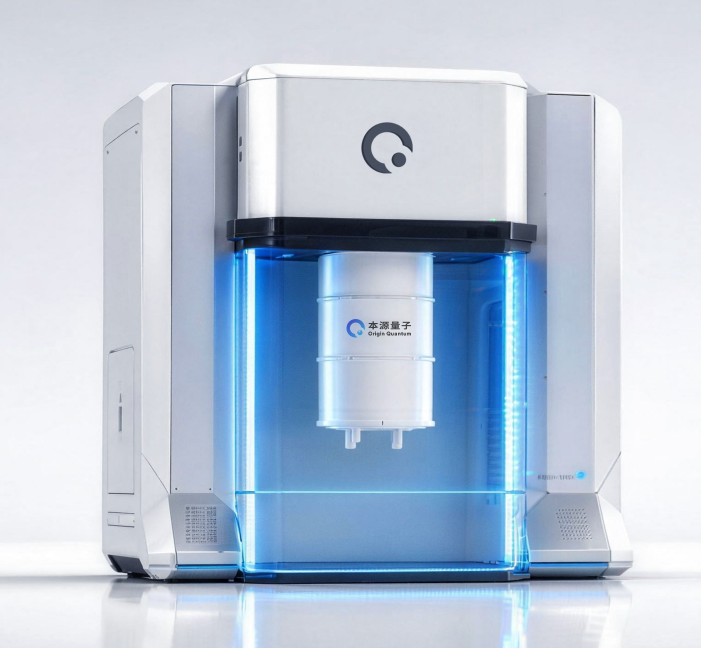
The industry has split into distinct layers. Hardware teams build the physical qubits across different types of quantum computers—such as superconducting circuits, trapped ions, and photonic chips. Software teams write the compilers, simulators, and hybrid quantum-classical orchestration layers that make those qubits useful. And a growing layer of applications engineers and consultants bridge the gap between quantum hardware and real business problems in finance, drug discovery, and logistics.
Each layer has different entry requirements. Different daily work. Different pay. Let's map them out.
Core Roles Across the Quantum Computing Stack
Here's a structured breakdown of the primary career tracks, what they actually demand, and what you can expect to earn in the US market in 2026.
| Role | Typical Education | Core Skill Stack | Day-to-Day Focus | Est. US Base Salary (2026) |
|---|---|---|---|---|
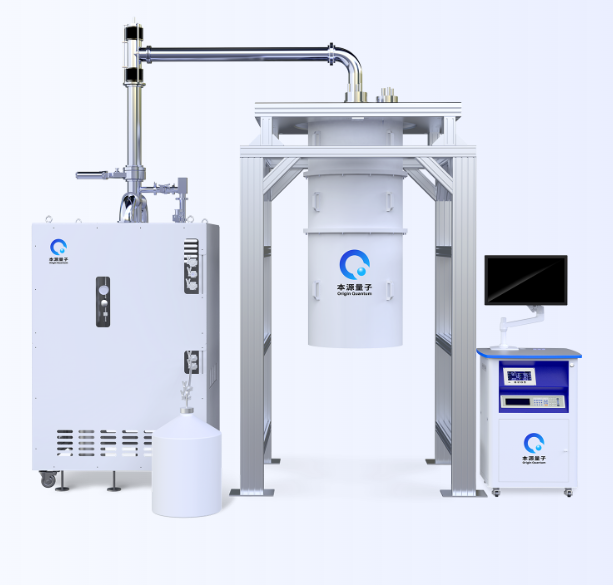
| Quantum Hardware Engineer | PhD (Physics, EE, Materials Science) | Cryo-engineering, microwave engineering, nanofabrication, dilution refrigerators | Designing, fabricating, and characterizing physical qubits; maintaining sub-kelvin environments | $145,000 – $210,000+ |
| Quantum Algorithm Researcher | PhD (CS Theory, Math, Physics) | Complexity theory, linear algebra, Qiskit/Cirq, error mitigation, variational algorithms (VQE, QAOA) | Designing and proving new quantum algorithms; publishing; benchmarking on NISQ devices | $160,000 – $230,000+ |
| Quantum Software Engineer | BS/MS in CS or Software Engineering | Python, Rust/C++, Qiskit, PennyLane, QPanda, CUDA, compiler design | Building SDKs, transpilers, simulators, and hybrid quantum-classical pipelines | $130,000 – $195,000 |
| Quantum Error Correction Specialist | PhD (Physics, Math, CS Theory) | Surface codes, topological codes, stabilizer formalism, decoding algorithms (MWPM, Union-Find) | Designing fault-tolerant protocols; simulating logical qubit performance | $170,000 – $250,000+ |
| Quantum Applications Engineer / Consultant | BS/MS (CS, Engineering, Finance, Chemistry) | Domain expertise + Qiskit/Cirq basics, hybrid workflows, client communication | Identifying quantum advantage use cases; building proof-of-concept demos for enterprise clients | $125,000 – $180,000 |
| Quantum Control Systems Engineer | BS/MS in EE (PhD optional) | FPGA programming, pulse shaping, real-time feedback systems, LabVIEW, Python | Building the classical electronics that manipulate and read out qubits | $135,000 – $190,000 |
Notice something? Half of these six core tracks are completely accessible with a Bachelor's or Master's degree—no doctorate required. That's not a footnote. That's the point.
Your Starting Point Determines Your Path
There is no single "quantum computing career path." There are at least three distinct on-ramps, depending on where you're standing today.
Path A: You're a Student (Undergrad or Early Grad)
If you're still in school, you have the most flexibility. Here's what actually moves the needle:
- Take linear algebra seriously. Not the "I passed the exam" kind. The kind where you can intuitively reason about tensor products, unitary transformations, and eigendecomposition. This is the language of quantum computing. Period.
- Get comfortable with Python and at least one quantum SDK. Qiskit (IBM) and Cirq (Google) are the two most widely used. PennyLane (Xanadu) is excellent if you're interested in quantum machine learning or variational approaches.
- Contribute to open-source quantum projects. IBM's Qiskit repository accepts community contributions. So does PennyLane. A merged pull request on your GitHub says more than any certificate.
- Consider a focused master's program if you want to accelerate. Programs at MIT, ETH Zurich, TU Delft, and the University of Waterloo offer quantum-specific tracks that compress years of self-study into 18–24 months.
Path B: You're a Software Engineer Looking to Pivot
This is the most common scenario I see, and it's the most promising. Quantum computing companies are desperate for people who can write production-quality code. The physics is hard. The software engineering around it is equally hard—and far more familiar to you.
- Learn the quantum computing model. You don't need to derive the Schrödinger equation. Instead, focus on operational fundamentals. Start by understanding how physical and logical qubits store information and how quantum logic gates manipulate them. From there, study how core phenomena like quantum superposition and entanglement drive algorithmic speedups prior to the final quantum measurement.
- Build something. Implement Grover's search. Write a variational quantum eigensolver (VQE) from scratch. Deploy a hybrid quantum-classical workflow on Origin Quantum Cloud. Ship it to GitHub with clean documentation.
- Target the software layer. Companies like IBM, Quantinuum, and Origin Quantum are actively hiring software engineers to build compilers, runtime systems, and cloud infrastructure. Your existing skills in distributed systems, API design, or DevOps transfer directly.
- Network inside the community. Attend the Qiskit Global Summer School, unitaryHACK (a quantum-focused hackathon), or the APS Global Physics Summit. These aren't just learning events—they're hiring pipelines.
Path C: You're a Physicist or Mathematician
You already speak the language. Your challenge isn't understanding quantum mechanics—it's translating that understanding into something industry values.
- Learn to code well. Not "research code that only you can run." Clean, tested, documented code. Python first. Rust or C++ if you're targeting performance-critical roles.
- Bridge the gap between theory and hardware realities. Your fault-tolerant algorithm might be mathematically sound, but today's commercial processors are still constrained by gate fidelity and coherence times. Learn what is actually runnable on current hardware: variational algorithms, error mitigation techniques, early logical-qubit demonstrations, and hybrid quantum-classical loops.
- Consider whether you want to stay in research (PhD track, postdoc, national lab) or move into industry. Both are valid. The pay gap has narrowed significantly since 2022.
The Skill Stack That Actually Gets You Hired
Let's get specific. Across all quantum computing roles, certain competencies appear repeatedly in job postings and hiring manager interviews:
- Programming: Python (non-negotiable). Rust or C++ for performance roles. Julia is emerging in simulation-heavy teams.
- Quantum SDKs: Qiskit, Cirq, PennyLane. Familiarity with at least one is expected. Knowing two is a differentiator.
- Mathematics: Linear algebra, probability theory, group theory (for error correction), optimization (for variational methods).
- Classical CS fundamentals: Data structures, algorithms, complexity theory. Quantum algorithms are still algorithms. Big-O analysis still matters.
- Domain knowledge (for applied roles): Computational chemistry, financial modeling, combinatorial optimization, or machine learning—depending on the vertical you're targeting.
One thing that surprises people: communication skills. Quantum computing is still early enough that most stakeholders—investors, enterprise clients, even internal product teams—don't fully understand the technology. People who can translate quantum concepts into business value are rare and well-compensated.
The NISQ Reality Check
Let's be blunt. While the industry is actively transitioning toward early fault tolerance, day-to-day commercial work is still largely defined by the realities of the NISQ era. Today's Noisy Intermediate-Scale Quantum processors—ranging from 50 to over 1,200+ physical qubits depending on the modality—remain error-prone without heavy error mitigation. They cannot yet run Shor's algorithm on cryptographically relevant numbers, nor can they natively simulate large complex molecules with chemical accuracy.
So what are companies actually hiring for?
Three things:
- Infrastructure and tooling. Making existing hardware more accessible, more stable, and easier to program. This is software engineering with a quantum flavor.
- Error correction and fault tolerance research. The long game. Building the theoretical and engineering foundation for logical qubits. This is where the PhD-heavy roles concentrate.
- Applications exploration. Finding problems where even noisy quantum devices might offer a speedup or advantage. This is where domain experts and hybrid quantum-classical workflows come in.
Companies like IBM, Google Quantum AI, IonQ, Rigetti, Quantinuum, PsiQuantum, and Xanadu are all hiring across these three categories. But their hiring profiles differ. IBM leans heavily into software and cloud platform roles. IonQ and Quantinuum hire more hardware physicists. PsiQuantum is building a photonic quantum computer and needs photonics engineers. Know your target.
Where This Industry Is Headed
The next five years will be defined by the race toward fault tolerance.
For your career, this means:
- Quantum error correction expertise will become the most in-demand niche. There are maybe a few hundred people worldwide who deeply understand surface codes, high-rate qLDPC codes, lattice surgery, and real-time decoding. If you can become one of them, you'll have extraordinary leverage.
- Hybrid quantum-classical engineering will be the dominant paradigm for at least another decade. Pure quantum algorithms won't replace classical computing. They'll augment it. Engineers who can design systems that seamlessly orchestrate both will be the backbone of every quantum product team.
- The "quantum advantage" milestone will create a hiring surge. When a company demonstrably solves a commercially relevant problem faster on a quantum computer than any classical alternative, investment and hiring will spike. Position yourself before that moment, not after.
Your First Move: Do This This Week
Stop reading articles about quantum computing. Start doing quantum computing.
Here's a concrete 30-day plan:
- Week 1: Complete the foundational modules on the IBM Quantum Learning platform. Then, run your first real quantum circuit using the free tier on Origin Quantum Cloud.
- Week 2: Implement the Deutsch-Jozsa algorithm and Grover's search from scratch. No copy-paste. Type every line.
- Week 3: Pick one open-source project (Qiskit, PennyLane, or Cirq) and read their contribution guidelines. Find a "good first issue" on GitHub. Attempt it.
- Week 4: Write a short blog post or LinkedIn article explaining what you built and what you learned. This becomes your portfolio piece. It also signals to recruiters that you're serious.
Then register for the next unitaryHACK or Qiskit Global Summer School. Put yourself in the room—virtual or physical—where quantum computing careers are being built in real time.
The field is young. The talent pool is shallow. The window to establish yourself as an early contributor is open right now. It won't stay open forever.
Frequently Asked Questions About Quantum Computing Careers
Do you need a PhD to work in quantum computing?
No, you do not need a PhD for most software and application roles in quantum computing. While hardware engineering, error correction theory, and core algorithm research still heavily favor doctorate holders, roughly half of the industry's open roles—such as Quantum Software Engineers, Cloud Infrastructure Developers, and Applications Consultants—only require a Bachelor's or Master's degree in Computer Science, Software Engineering, or a related quantitative field.
Are quantum computing jobs in high demand in 2026?
Yes, demand is steadily growing, particularly for engineers who bridge the gap between classical and quantum systems. As hardware companies scale past 1,000 physical qubits and race toward fault tolerance, there is an acute shortage of talent skilled in quantum error correction (QEC), compiler optimization (Rust/C++), and hybrid quantum-classical cloud orchestration.
What programming language is best for quantum computing?
Python is the undisputed primary language for quantum computing, as it powers leading SDKs like Qiskit, Cirq, and PennyLane. However, if you are targeting high-performance quantum simulation, compiler design, or hardware control systems, proficiency in C++ or Rust is highly valued by employers.
Contact Us
 (+86) 177 3001 9472
 market@originqc.com