Quantum Computing Gates: The Linear Algebra for Developers
Quantum computing gates are the fundamental unitary operations used to manipulate the state vectors of qubits within a quantum processor. Unlike classical logic gates that map deterministic binary states through irreversible Boolean functions, quantum logic gates apply reversible matrix multiplications in a complex Hilbert space. These mathematical operations are the exact mechanisms used to engineer superposition and entanglement, driving the algorithmic speedups found in quantum circuits.
If you write software for a living, you need to discard your classical intuition about state mutation. A quantum gate does not "overwrite" a variable. It rotates a probability amplitude vector. Because the physical laws governing closed quantum systems demand the conservation of probability, every single quantum gate must be perfectly reversible. No information is ever erased during the computation.

The Mathematical Engine: Unitary Matrices and State Vectors
Pop-science articles love to say a qubit is "both 0 and 1 at the same time." That is a lazy heuristic that will actively hurt your understanding of quantum algorithms. To actually build quantum circuits, you must look at the linear algebra.
A single qubit state is represented using Dirac notation as a vector in a two-dimensional complex vector space:
Here, α and β are complex numbers called probability amplitudes. The strict physical constraint is that the total probability must sum to one: |α|2 + |β|2 = 1.
A quantum gate is simply a matrix U that multiplies this state vector. But it cannot be just any matrix. To preserve the normalization constraint, the matrix must be unitary. A unitary matrix satisfies the condition:
Where U† is the conjugate transpose of U, and I is the identity matrix. This mathematical property is the exact reason quantum gates are reversible. If you apply gate U, you can always apply U† to undo the operation. In classical computing, erasing information dissipates heat (known as Landauer's principle). Quantum gates bypass this thermodynamic cost by never losing information in the first place.
Classical Logic Gates vs. Quantum Logic Gates
The table below strips away the hype and compares the operational reality of both paradigms. Writing quantum algorithms requires shifting from Boolean logic to continuous geometric rotations.
| Architecture Feature | Classical Logic Gates | Quantum Logic Gates |
|---|---|---|
| State Representation | Discrete voltage thresholds (0V / 5V) | Complex vectors in a Hilbert space (Bloch sphere) |
| Mathematical Operation | Boolean algebra (AND, OR, NOT) | Unitary matrix multiplication (Linear algebra) |
| Information Conservation | Mostly irreversible (Information is lost/erased) | Strictly reversible (U†U = I) |
| Multi-Bit Interaction | Independent wires, simple logic routing | Tensor products, generating entanglement |
| Error Paradigm | Deterministic bit flips (handled by simple parity) | Continuous phase/amplitude drift (requires QEC codes) |
Single-Qubit Gates: Rotating the Bloch Sphere
Single-qubit gates operate on one qubit at a time. Geometrically, applying one of these gates rotates the qubit's state vector around the Bloch sphere. The Bloch sphere is a 3D visualization where the north pole is |0⟩, the south pole is |1⟩, and the equator represents equal superpositions with varying complex phases.
The Pauli Gates (X, Y, Z)
The Pauli matrices form the basis for single-qubit operations. They correspond to 180-degree (π) rotations around the X, Y, and Z axes of the Bloch sphere.
| 0 | 1 |
| 1 | 0 |
| 0 | -1 |
| 1 | 0 |
| 1 | 0 |
| 0 | -1 |
The Pauli-X gate is the quantum equivalent of a classical NOT gate. It swaps the amplitudes of |0⟩ and |1⟩.
The Pauli-Z gate has no classical analogue. Look at the matrix. It leaves the |0⟩ state completely untouched, but it multiplies the |1⟩ state by -1. This is a phase flip. If you measure the qubit immediately after a Z gate, you will not notice any difference in the probabilities. The phase is invisible to standard computational basis measurements. However, when this phase-shifted qubit interferes with other qubits later in the quantum circuit, that negative sign causes destructive interference, fundamentally altering the final output probabilities.
The Hadamard Gate (H)
The Hadamard gate is the primary tool for qubit manipulation into superposition. It acts as the initialization gate for many famous routines, including Grover's Search Algorithm. Its matrix is defined as:
| 1 | 1 |
| 1 | -1 |
Apply this to a qubit initialized in the |0⟩ state (which is the vector [1, 0]T):
| 1 |
| 1 |
The qubit is now in an equal superposition. Measure it, and you have a 50% chance of collapsing the state to |0⟩ and a 50% chance of collapsing to |1⟩. Notice the math. It is not "both 0 and 1". It is a specific, deterministic vector pointing directly along the X-axis of the Bloch sphere. The randomness only occurs at the very end, during measurement.
Phase Gates and the T-Gate
While Hadamard creates superposition, phase gates sculpt it. The S gate applies a π/2 phase shift, and the T gate applies a π/4 phase shift.
The T gate deserves special attention. In fault-tolerant quantum computing, Clifford gates (H, S, CNOT) are relatively easy to error-correct. But the Gottesman-Knill theorem proves that circuits made only of Clifford gates can be efficiently simulated on a classical laptop. They offer no quantum advantage. Injecting T gates into your quantum circuits provides the necessary non-Clifford resource to achieve universal quantum computation. Generating clean T gates via magic state distillation is currently one of the most expensive operations in quantum error correction.
Multi-Qubit Gates: Tensor Products and Entanglement
Single-qubit gates cannot solve complex problems. You need qubits to interact. In classical computing, if you have two bits, the state space is just the two bits sitting next to each other. In quantum mechanics, the state space of multiple qubits is defined by the tensor product (Kronecker product) of their individual vector spaces. Two qubits give you a 4-dimensional space. Three qubits give you 8 dimensions. n qubits give you 2n dimensions. This exponential scaling is where the power lies.
The CNOT Gate (Controlled-NOT)
The CNOT gate is the standard two-qubit entangling gate. It takes a control qubit and a target qubit. If the control is |1⟩, it applies an X gate to the target. The 4x4 unitary matrix looks like this:
| 1 | 0 | 0 | 0 |
| 0 | 1 | 0 | 0 |
| 0 | 0 | 0 | 1 |
| 0 | 0 | 1 | 0 |
Let us look at what happens when we combine the Hadamard gate and the CNOT gate. We initialize two qubits in |00⟩. We apply a Hadamard to the first qubit, putting it in superposition. Then we use that first qubit as the control for a CNOT targeting the second qubit.
This resulting state is a Bell state. It is mathematically impossible to factor this state back into two independent qubits (i.e., you cannot write it as (a|0⟩ + b|1⟩) ⊗ (c|0⟩ + d|1⟩)). This non-separability is the exact mathematical definition of entanglement. This physical resource powers subroutines like quantum teleportation and Shor's Factoring Algorithm. Measuring the first qubit instantly forces the second qubit into the exact same state.
The SWAP Gate and Hardware Topology
The SWAP gate exchanges the states of two qubits. In a perfect theoretical model, SWAP is just a logical convenience. In physical hardware, it is a massive bottleneck.
Superconducting quantum chips have fixed physical topologies. Qubit 0 might only be physically wired to Qubit 1 and Qubit 2. If your algorithm requires a CNOT between Qubit 0 and Qubit 5, the quantum compiler must insert a series of SWAP gates to physically move the quantum state across the chip. Each SWAP requires three physical CNOT gates. This rapidly inflates your circuit depth, exposing your fragile qubits to environmental noise.
The Hardware Reality: Gate Fidelity and Decoherence
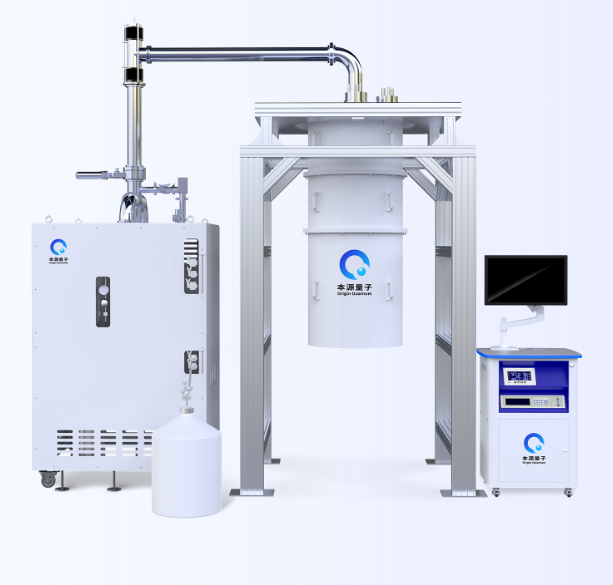
When you write a quantum circuit in Qiskit or Cirq, a CNOT is just a single line of code. On the actual hardware, it is a highly calibrated microwave pulse sent through a coaxial cable into a dilution refrigerator operating at 15 millikelvin.
Physical quantum computing gates are not perfect mathematical matrices. They suffer from unitary errors (the microwave pulse rotates the qubit by 179 degrees instead of 180) and non-unitary errors (the qubit interacts with stray thermal photons in the fridge).
We measure this using Gate Fidelity. A fidelity of 99.5% sounds great until you realize that an algorithm requiring 1,000 sequential gates will compound that error, leaving you with a near-zero probability of getting the correct answer. This is why tracking the T1 (relaxation time) and T2 (dephasing time) of your qubits is mandatory. If your total gate execution time exceeds the coherence time of the hardware, your quantum state decays into classical thermal noise before you can measure it.
Frequently Asked Questions
Can quantum gates execute "if/else" conditional logic?
Not in the classical sense. You cannot measure a qubit in the middle of a circuit and use that classical result to decide which gate to apply next without collapsing the entire quantum state and destroying your superposition. Instead, quantum algorithms use controlled gates (like CNOT or Toffoli) to apply conditional logic coherently. The "condition" remains in a state of quantum superposition, allowing the algorithm to process multiple computational paths simultaneously.
Why is measurement not considered a quantum gate?
Quantum gates are described by unitary matrices, meaning they are deterministic and reversible. Measurement is a non-unitary, irreversible projection. When you measure a qubit, you force the complex probability amplitudes to collapse into a single classical bit (0 or 1). You lose all information about the original superposition. Because it destroys information and cannot be reversed, measurement is classified as an observation operation, not a logic gate.
How do parameterized gates work in hybrid algorithms?
Parameterized gates, like RX(θ) or RZ(θ), apply a rotation by a variable angle θ. In Variational Quantum Algorithms (like VQE), the quantum processor acts as a co-processor. It executes the parameterized quantum circuit and returns an expectation value. A classical optimization algorithm running on a standard CPU analyzes this value and updates the parameter θ for the next iteration. This hybrid loop is currently the most viable method for extracting useful computations from noisy, intermediate-scale quantum (NISQ) hardware.
Contact Us
 (+86) 177 3001 9472
 market@originqc.com