Top Superconducting Quantum Computing Companies in 2026
Superconducting qubits are not the only way to build a quantum computer, but they are the approach that looks most like something you could manufacture at scale. Instead of trapping individual ions in electromagnetic fields or routing single photons through optical tables, superconducting quantum computers are built on chips — using fabrication techniques descended directly from the semiconductor industry. That matters because the entire global supply chain for making classical chips already exists. The question is no longer whether superconducting qubits can work. The question is which companies can make them reliable enough to solve actual problems.
Here is a detailed breakdown of the top superconducting quantum computing companies, what they have built so far, and where each one stands on the path from laboratory curiosity to commercial utility.
Top Superconducting Quantum Computing Companies
IBM
IBM has the longest public roadmap and the largest installed base of superconducting quantum systems. Anyone with an internet connection can run circuits on IBM hardware through the Quantum Experience, which means the company benefits from a massive feedback loop: thousands of developers, researchers, and students hammering their systems every day and reporting back on what works and what does not.
IBM's hardware evolution tells a clear story. The early processors — five-qubit Tenerife, twenty-qubit Tokyo — were proof-of-concept devices. The 127-qubit Eagle chip in 2021 demonstrated that IBM could pack more qubits onto a single die while maintaining control fidelity. The 433-qubit Osprey followed in 2022. But the real inflection point was the 1,121-qubit Condor processor in 2023, which pushed the limits of what a single dilution refrigerator can handle.
More important than raw qubit count is the Heron processor, also released in 2023. Heron introduced tunable couplers between qubits, which dramatically reduced crosstalk — the phenomenon where operating on one qubit accidentally perturbs its neighbors. Heron achieved two-qubit gate fidelities around 99.6%, a meaningful improvement that directly translates to deeper circuits before errors accumulate. IBM also demonstrated that Heron chips can be linked together across separate dilution refrigerators using classical and quantum interconnects, pointing toward a modular scaling strategy that bypasses the physical constraints of single-chip designs.
IBM's software ecosystem — Qiskit — is arguably as valuable as its hardware. Qiskit is open source, widely taught in university courses, and has become the de facto programming interface for superconducting quantum computers. The combination of accessible hardware and a mature software stack gives IBM a moat that purely hardware-focused competitors struggle to cross.
The open question is whether IBM can transition from demonstrating quantum advantage on carefully constructed benchmark circuits to solving commercially relevant problems. So far, IBM's quantum systems are used primarily for research and exploration. The company is investing heavily in quantum-centric supercomputing — integrating classical and quantum processors into a single computational fabric — but the timeline for practical advantage in chemistry, optimization, or machine learning remains uncertain.
Google Quantum AI
Google's 2019 quantum supremacy experiment — running a random circuit sampling task on a 53-qubit Sycamore processor in 200 seconds, a computation they estimated would take a classical supercomputer 10,000 years — was a landmark moment. But supremacy demonstrations are not the same as useful computation. Since then, Google has pivoted toward a harder and more consequential problem: error correction.
In a quantum computer, errors accumulate faster than you can fix them unless your physical qubits are good enough and you have enough of them to encode a single logical qubit redundantly. Google's approach uses the surface code, a topological error correction scheme that arranges data qubits and ancilla qubits on a two-dimensional grid. The surface code has a relatively high error threshold — around 1% — meaning that if your physical gate fidelities exceed 99%, you can theoretically build a logical qubit that is more reliable than any of its physical components.
Google's December 2023 paper in Nature showed exactly this. By scaling from a distance-3 surface code (using 49 physical qubits) to a distance-5 code (using 105 physical qubits), they demonstrated that the logical error rate decreased exponentially with code distance — the hallmark of effective error correction. This was the first experimental demonstration of below-threshold error correction in a superconducting system, and it validated the core premise that fault-tolerant quantum computing is achievable, not just theoretically possible.
Google's next milestone is building a logical qubit that is useful for actual computation — one that can sustain thousands of logical operations with acceptably low error rates. That will require thousands of physical qubits per logical qubit, which means scaling to tens or hundreds of thousands of physical qubits total. Google has not published a specific roadmap with timelines the way IBM has, but their research trajectory is clear: error correction first, commercialization second.
Origin Quantum
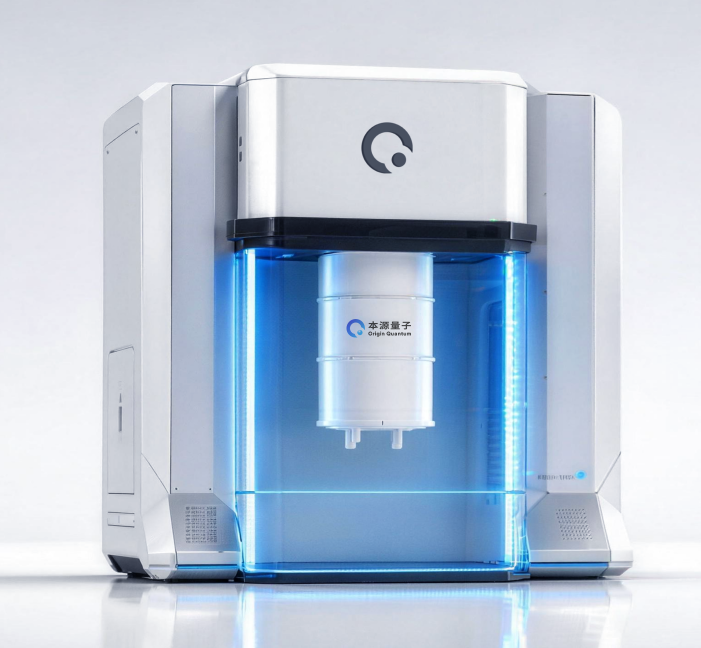
Origin Quantum, based in Hefei, China, is building a full-stack quantum computing capability that spans chip design, fabrication, control electronics, and software. The company's 180-qubit superconducting processor, branded as "Origin Wukong," was made available via cloud access in early 2024, marking China's first publicly accessible superconducting quantum system of this scale.
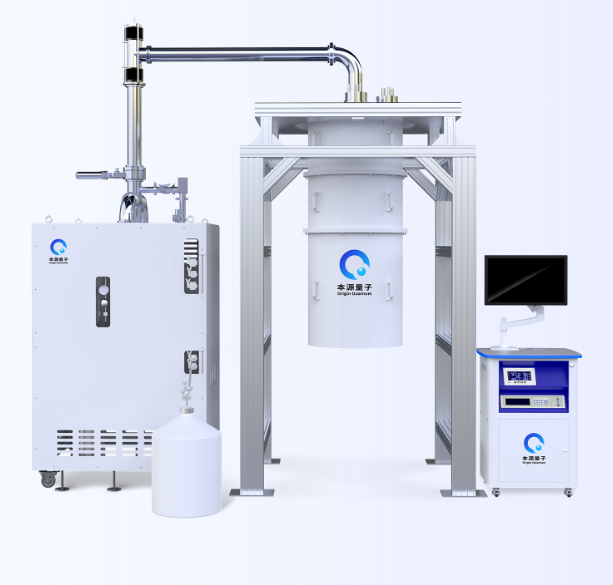
Superconducting quantum computers require dilution refrigerators capable of reaching 15 milliKelvin, arbitrary waveform generators for microwave pulse control, and specialized fabrication equipment for patterning Josephson junctions. Origin has developed its own dilution refrigerator, its own control system ("Origin Pliot"), and its own quantum chip fabrication line.The gap is narrowing, and Origin's ability to iterate quickly on a domestic supply chain could accelerate improvement rates in the coming years.
Rigetti Computing
Rigetti is the only pure-play superconducting quantum computing company publicly traded on a U.S. exchange. The company operates its own semiconductor fabrication facility — the Fab-1 line in Fremont, California — giving it direct control over the chip manufacturing process from design to tape-out.
Rigetti's technical strategy centers on modularity. Rather than building ever-larger single chips, Rigetti has pursued a multi-chip architecture that connects multiple smaller dies within a single cryogenic package. This approach sidesteps the yield problem that plagues large monolithic chips — if one region of a 1,000-qubit monolithic die has a fabrication defect, the entire chip may be unusable. With a multi-chip design, defective modules can be swapped out without scrapping the entire system.
The Ankaa system, Rigetti's current flagship, features 84 qubits with two-qubit gate fidelities approaching 99.5%. Rigetti has also demonstrated a 36-qubit processor with gate fidelities that, in internal benchmarks, produce algorithmic results competitive with classical methods for specific graph optimization problems.
Rigetti's commercial strategy has focused on government and defense contracts, including work with DARPA and the U.S. Department of Energy. These contracts provide stable revenue but also mean that some of Rigetti's most advanced work may not be visible to the broader quantum community. The company's financial position has been precarious — it went public via SPAC merger in 2021, saw its market capitalization collapse, and underwent restructuring in 2023. Survival depends on demonstrating clear quantum advantage in commercially relevant domains before capital runs out.
IQM Quantum Computers
IQM, headquartered in Espoo, Finland, takes a different commercialization approach: instead of offering cloud access, IQM sells complete quantum computers for on-premises deployment. Customers receive a fully integrated system — quantum processor, dilution refrigerator, control electronics, and software — installed and maintained at their own facility.
This model addresses a real concern among government and enterprise customers who want data sovereignty and physical control over their quantum hardware. Their Garnet system features over 50 qubits and is designed for integration with classical high-performance computing infrastructure.
IQM's technical approach emphasizes open hardware architecture and co-design with end users. Rather than pushing a fixed roadmap, IQM works with each customer to optimize the quantum processor for their specific application domain — whether that is quantum chemistry simulations for a pharmaceutical company or optimization problems for a logistics firm.
The challenge with on-premises deployment is support complexity. A superconducting quantum computer requires continuous cryogenic cooling, regular calibration of microwave control pulses, and specialized expertise to operate. Scaling this model from three installations to hundreds will require a significant investment in training and remote diagnostics infrastructure. IQM is addressing this by developing automated calibration routines and remote monitoring tools, but the operational burden remains a factor in customer adoption decisions.
Why Superconducting Qubits Lead in Scale
Every quantum computing architecture makes a different tradeoff. Trapped-ion systems deliver gate fidelities above 99.9% and coherence times measured in seconds, but scaling past a few dozen qubits means fitting more ions into a vacuum chamber without their motional modes coupling into chaos. Photonic systems sidestep the cooling problem entirely but struggle with deterministic two-qubit gates. Superconducting qubits sit at a different point on that spectrum: gate fidelities in the 99.5-99.8% range, coherence times of 100-500 microseconds, and gate speeds in the tens of nanoseconds — fast enough that you can squeeze thousands of operations into the brief window before decoherence destroys your calculation.
The critical advantage is manufacturing. A superconducting qubit is, at its core, a superconducting circuit patterned on a silicon or sapphire wafer using aluminum or niobium. The lithography, deposition, and etching steps are variations on processes that TSMC and Intel have been refining for decades. When IBM builds a 1,000+ qubit processor, it is not assembling individual quantum objects by hand — it is running a fabrication line. That is why superconducting architectures have consistently achieved the highest qubit counts of any platform, and why the companies betting on them are the ones with the deepest pockets and the longest roadmaps.
The bottleneck is no longer putting more qubits on a chip. It is making those qubits talk to each other without introducing errors faster than you can correct them. That is where each company's strategy diverges.
Frequently Asked Questions
Who currently has the most powerful superconducting quantum computer?
By raw qubit count, IBM holds the public record with its 1,121-qubit Condor processor. However, qubit count alone is not a meaningful measure of computational power. Google has not disclosed the qubit count of its current internal systems, but its error correction work suggests it is operating at scale comparable to or beyond IBM's public systems. The real metric that matters is the quality of computation you can perform — circuit depth, algorithmic success rate, and error-corrected logical operations — and on those measures, IBM and Google are the clear leaders, with the gap between them narrowing each year.
Are superconducting qubits better than trapped ions?
"Better" depends entirely on the metric. Superconducting qubits have much faster gate speeds and are easier to manufacture at scale using existing semiconductor fabs. Trapped ions boast significantly longer coherence times and higher gate fidelities, but they are slower and much harder to scale physically.
How cold do superconducting quantum computers need to be?
They need to be cooled to approximately 15 milliKelvin (0.015 degrees above absolute zero). At this temperature, thermal energy is low enough to prevent it from destroying the fragile quantum states of the superconducting circuits.
Contact Us
 (+86) 177 3001 9472
 market@originqc.com