How Do Quantum Circuits Work? Explained Simply
You've probably stared at a quantum circuit diagram and thought — wait, where are the actual wires? There's no soldering iron, no breadboard, no silicon traces you can point to. Just colorful boxes on lines. So how do quantum circuits work in the messy, physical, real world?
Let's break it all down — step by step, no PhD required. We'll go from the moment you click "run" on your screen to the instant a quantum chip spits out an answer. Along the way, I'll share some war stories from the field, a few pro tips, and explain why this stuff is way more approachable than the hype suggests.

The Big Picture: Your Circuit Goes on a Five-Step Journey
Before we get into the weeds, here's the roadmap. Every quantum circuit you design follows the same basic pipeline:
- You draw the circuit — drag, drop, connect.
- A compiler translates your abstract design into hardware-specific instructions.
- Energy pulses are fired — microwaves, lasers, or light, depending on the platform.
- Measurement happens — the quantum state collapses into classical data.
- Statistics are collected — the circuit runs hundreds or thousands of times to build a probability distribution.
That's it. Five steps. But each one hides a universe of engineering. Let's dig in.
Step 1: You Draw the Circuit
Picture this: you open a tool like IBM Quantum Composer, Qiskit, or Cirq. You see horizontal lines — those represent qubits (quantum bits). You drag colorful boxes onto those lines. Each box is a quantum gate — an operation that manipulates the qubit's state.
Some gates you'll use constantly:
- Hadamard gate (H) — puts a qubit into superposition (equal probability of 0 and 1).
- CNOT gate (CX) — entangles two qubits, so measuring one instantly tells you about the other.
- Pauli-X gate — flips a qubit from |0⟩ to |1⟩, basically a quantum NOT.
- Phase gates (S, T, Rz) — rotate the qubit's quantum phase without changing measurement probabilities directly.
At this stage, your circuit is pure abstraction. It's a digital description — a recipe. Think of it like writing a song in sheet music. The notes exist on paper, but nobody's playing an instrument yet.
Pro tip from the trenches: Start small. I've watched newcomers try to build a 50-qubit monster on their first attempt. Don't. Build a 2-qubit Bell state circuit first. Seriously. Get a feel for how superposition and entanglement show up in your results before scaling up. It'll save you hours of debugging later.
Step 2: The Compiler Translates
Here's where things get interesting — and where a lot of people get tripped up.
Your beautiful abstract circuit? The physical quantum chip can't run it directly. Not every chip supports every gate natively. The quantum compiler acts as a translator, converting your high-level design into a set of low-level, hardware-specific instructions the chip actually understands.
Gate Decomposition: Breaking Complex Moves Into Simple Ones
Say your circuit uses a Toffoli gate (a 3-qubit operation). Most superconducting chips only natively support 1-qubit and 2-qubit gates. The compiler breaks that Toffoli gate into a sequence of CNOTs and single-qubit rotations — sometimes 6 or more operations to replace one.
It's like trying to explain the word "serendipity" to someone who doesn't speak English. You can't just say the word. You gotta describe it: "a happy accident, a fortunate discovery made by chance." Same idea. One complex gate becomes many simple ones.
Qubit Mapping: Which Physical Qubit Plays Which Role?
Your circuit has abstract qubits — q0, q1, q2. The chip has physical qubits — let's call them Q5, Q12, Q27. The compiler has to decide which abstract qubit maps to which physical one.
Why does this matter? Two big reasons:
- Connectivity: On most chips, not every qubit connects to every other qubit. If your circuit needs a CNOT between q0 and q2, but those physical qubits aren't neighbors, the compiler inserts SWAP gates to shuffle the data around. That adds operations — and every extra operation adds noise.
- Noise levels: Some physical qubits are noisier than others at any given moment. A smart compiler checks current calibration data and routes your circuit through the quietest available qubits.
Step 3: Pulses Are Fired
This is the step that makes quantum computing real. Your compiled instructions get converted into precisely timed electromagnetic signals — and the type of signal depends entirely on what kind of quantum computer you're running.
Let's look at the three big players.
Superconducting Qubits
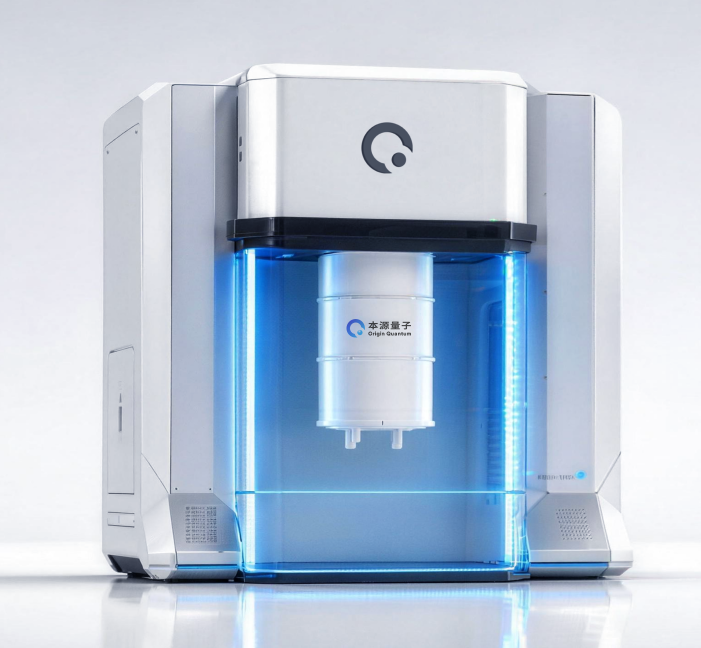
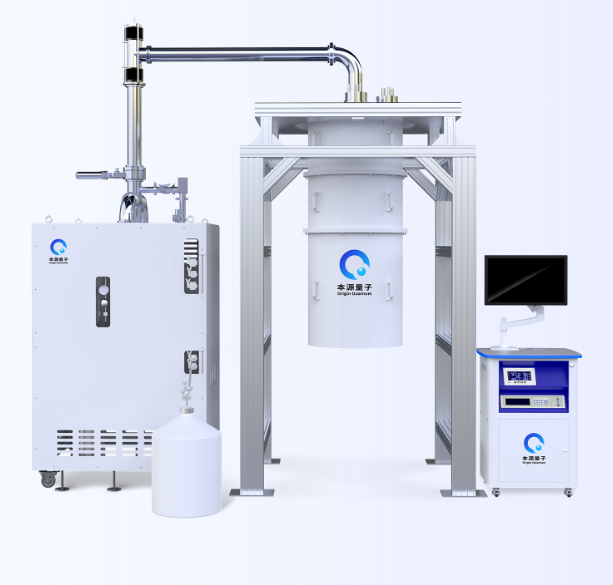
This is the tech behind IBM and Google's quantum processors. The qubits are tiny circuits — loops of superconducting metal (usually niobium or aluminum) sitting inside a dilution refrigerator cooled to roughly 15 millikelvins. That's about 180 times colder than the vacuum of space.
Why so cold? Heat is the enemy of quantum states. Thermal energy causes decoherence — the qubit loses its delicate quantum properties and starts behaving like a regular, boring classical bit. At 15 mK, thermal noise drops low enough for quantum effects to dominate.
Each gate in your circuit becomes a microwave pulse beamed into the chip through coaxial cables. The pulse's frequency, duration, amplitude, and shape determine which gate gets applied:
- An H gate might be a ~20-nanosecond burst at a specific microwave frequency.
- A CNOT gate might be a ~50-nanosecond burst at a different frequency, targeting two coupled qubits simultaneously.
Think of it like tuning a radio. Dial to 97.1 FM, you get one station. Dial to 103.5, you get another. Dial a microwave pulse to exactly the right frequency, you rotate a specific qubit's quantum state. Wrong frequency? Nothing happens — or worse, you hit the wrong qubit.
Trapped-Ion Qubits
Companies like IonQ and Quantinuum take a totally different approach. Their qubits are individual atoms — typically ytterbium or beryllium ions — suspended in a vacuum chamber using electromagnetic traps. The ions float in a row, held in place by electric fields, like beads on an invisible string.
Here, each gate becomes a precisely aimed laser pulse. The laser's frequency is tuned to match the atom's internal energy level transitions. Hit the ion with the right laser at the right time, and you nudge its quantum state exactly where you want it.
The cool thing about trapped ions? Every qubit can talk to every other qubit. Unlike superconducting chips where qubits only connect to their nearest neighbors, trapped-ion systems use collective vibrational modes (phonons) to mediate interactions between any pair of ions. That means fewer SWAP gates, shorter compiled circuits, and often higher fidelity results.
Photonic Qubits
In a photonic quantum computer (think Xanadu, PsiQuantum), the qubits are individual particles of light — photons. Instead of microwave pulses or lasers, gates are implemented using optical components:
- Beam splitters — put a photon into a superposition of two paths.
- Phase shifters — rotate the photon's quantum phase.
- Mirrors and waveguides — route photons through an optical network.
Photonic systems have a massive advantage: they operate at room temperature. No cryogenic fridge needed. The downside? Photon loss. Photons can get absorbed or scattered, and you can't just "hold" a photon still — it's always moving at the speed of light. Engineering around that is… non-trivial, to say the least.
| Platform | Qubit Type | Gate Mechanism | Operating Temp | Key Players |
|---|---|---|---|---|
| Superconducting | Metal loops | Microwave pulses | ~15 mK | IBM, Google |
| Trapped-Ion | Individual atoms | Laser pulses | Room temp (vacuum) | IonQ, Quantinuum |
| Photonic | Photons | Beam splitters, phase shifters | Room temp | Xanadu, PsiQuantum |
| Neutral Atom | Rubidium / Cesium | Laser tweezers + Rydberg excitation | Ultra-cold vacuum | QuEra, Pasqal |
Step 4: Measurement Happens
After all the pulses fire in the correct sequence, you need to read out the result. This is quantum measurement — and it's the point of no return.
Before measurement, your qubits exist in a superposition — a combination of |0⟩ and |1⟩ simultaneously. The act of measuring forces each qubit to "pick" a definite state: 0 or 1. Physicists call this wave function collapse. You can't peek at the superposition without destroying it. That's not a limitation of our technology — it's a fundamental law of quantum mechanics.
How Measurement Works on Different Platforms
- Superconducting chips: A weak microwave probe signal is sent to each qubit. The qubit's state (0 or 1) shifts the resonant frequency of a coupled readout resonator. By analyzing the reflected signal's phase and amplitude — a technique called dispersive readout — you determine the qubit's state with high accuracy.
- Trapped-ion systems: A laser illuminates the ions. If an ion is in state |1⟩, it fluoresces (glows brightly). If it's in state |0⟩, it stays dark. A camera or photodetector captures this. Simple, elegant, and surprisingly reliable.
- Photonic systems: Single-photon detectors sit at the end of the optical network. They register whether a photon arrived at a given output port — click or no click.
Here's the thing that trips people up: a single measurement gives you one random outcome from the probability distribution. It doesn't give you the full picture. For that, you need Step 5.
Step 5: Statistics Are Collected — The Power of Repetition
Quantum mechanics is probabilistic. Not "kind of" probabilistic — fundamentally probabilistic. Even if you run the exact same circuit on the exact same qubits with the exact same pulses, you won't always get the same result.
So what do you do? You run the circuit over and over. In the industry, each run is called a "shot." Typical jobs use anywhere from 1,024 to 100,000 shots. Each shot produces a binary string — say, "01101" for a 5-qubit circuit.
Stack all those results into a histogram, and patterns emerge. The correct answer to your computational problem shows up as the tallest peak in the distribution. Noise and errors create smaller peaks around it.
The ratio of the correct answer's peak height to the noise floor is what we call the signal-to-noise ratio — and it's the single most important metric for evaluating whether a quantum circuit actually "worked." If your correct answer shows up 55% of the time and the next highest result is 8%, you've got a strong signal. If the correct answer is 12% and everything else is 10%… you've got a problem.
How Do Quantum Circuits Work Differently from Classical Circuits?
If you're coming from a classical computing background (and most of us are), the differences are worth spelling out clearly:
| Feature | Classical Circuit | Quantum Circuit |
|---|---|---|
| Basic unit | Bit (0 or 1) | Qubit (superposition of 0 and 1) |
| Operations | Logic gates (AND, OR, NOT) | Quantum gates (H, CNOT, Rz, etc.) |
| Output | Deterministic | Probabilistic |
| Parallelism | Explicit (multiple cores) | Inherent (superposition explores many states) |
| Copying data | Trivial (copy-paste) | Impossible (no-cloning theorem) |
| Error handling | Mature, near-zero error rates | Active research area, noisy hardware |
The big one? You can't copy a qubit. The no-cloning theorem — proven in 1982 by Wootters, Zurek, and Dieks — states that it's physically impossible to create an identical copy of an unknown quantum state. This has massive implications for quantum circuit design. In classical computing, you copy data all the time. In quantum computing, you have to find other ways to move and manipulate information.
Common Pitfalls When Learning How Quantum Circuits Work
After mentoring dozens of developers transitioning into quantum, here are the mistakes I see most often:
- Ignoring the compiler. People obsess over circuit design but never check what the compiler actually sends to the hardware. Always inspect the transpiled circuit. You'll be shocked at how many extra gates get added.
- Running too few shots. 100 shots might be fine for a 2-qubit demo. For anything real, use at least 4,096. More shots = cleaner statistics = more reliable answers.
- Forgetting about decoherence time. Every qubit has a T1 (relaxation time) and T2 (dephasing time). If your circuit takes longer to execute than these times, your results will be garbage. Check the backend's calibration data before running.
- Treating simulation results as ground truth. Simulators don't model noise (unless you explicitly tell them to). A circuit that works perfectly in simulation might struggle on real hardware. Always test on actual quantum hardware before drawing conclusions.
Frequently Asked Questions (FAQ)
How do quantum circuits work differently from classical logic circuits?
Classical circuits process bits that are either 0 or 1 using deterministic logic gates like AND, OR, and NOT. Quantum circuits process qubits that can exist in a superposition of 0 and 1 simultaneously, using quantum gates like Hadamard and CNOT. Quantum circuit outputs are probabilistic — you need to run the circuit many times and analyze the statistical distribution to find the answer.
What is a quantum gate and how does it physically work?
A quantum gate is an operation that rotates a qubit's quantum state. Physically, it's implemented as a precisely shaped pulse of energy — a microwave burst in superconducting systems, a laser pulse in trapped-ion systems, or an optical component in photonic systems. The pulse's frequency, duration, and amplitude determine exactly how the qubit's state changes.
Can I run a quantum circuit on a real quantum computer for free?
Yes. Origin Quantum offers free access to real quantum hardware through their cloud platform.
What programming languages are used for quantum circuits?
Python dominates the quantum programming landscape. The main frameworks are Qiskit (IBM), Cirq (Google), and QPanda (Origin Quantum) — all Python-based. Some lower-level tools use C++ or Julia for performance-critical simulation.
Contact Us
 (+86) 177 3001 9472
 market@originqc.com