Types of Quantum Computers Explained: Superconducting vs Trapped Ion vs Photonic
Exploring the Diverse Types of Quantum Computers: Your Guide to the Future of Tech
In this deep dive, we’ll break down the major quantum computing types, their real-world applications, and why the differences matter.
Unlike classical computers that use bits (0s or 1s), quantum computers leverage qubits, which can exist in multiple states at once thanks to quantum mechanics principles like superposition and entanglement. This unlocks insane processing power for specific problems. But here’s the kicker: qubits are fragile, and how they’re built defines a machine’s strengths and limits. That’s why the types of quantum computers vary so wildly—they’re engineered using distinct physical systems, each with trade-offs in speed, stability, and scalability.
The Main Types of Quantum Computers: Breaking Down the Tech
Superconducting Quantum Computers
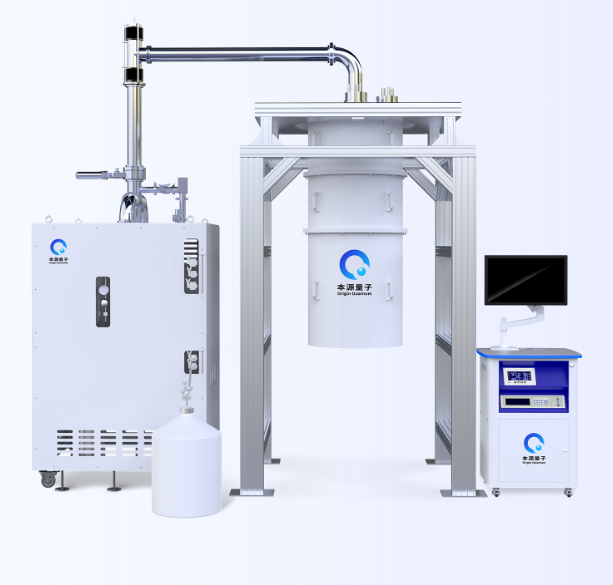
Think of superconducting quantum computers as the "sports cars" of the quantum world. They use tiny superconducting circuits chilled to near absolute zero (-273°C!) to create qubits. When cooled, these circuits lose electrical resistance, allowing electrons to flow without energy loss—perfect for maintaining quantum states. Companies like IBM (with their Eagle and Osprey processors) and Google (famous for their 2019 quantum supremacy demo) dominate this space. Why? Superconducting systems enable fast gate operations (think nanoseconds), making them ideal for complex simulations like financial modeling. But there’s a catch: they’re error-prone due to environmental noise, and scaling beyond a few hundred qubits remains tough. If you’re eyeing near-term practical apps, this quantum computing type is where much of the action is right now.
Trapped Ion Quantum Computers
Next up, trapped ion quantum computers. Here, individual atoms (ions) are suspended in electromagnetic fields and manipulated with lasers to form qubits. IonQ and Honeywell (now part of Quantinuum) are leading the charge. These systems shine with exceptional qubit stability—coherence times (how long quantum states last) can hit seconds, not microseconds. That means higher accuracy for tasks like molecular chemistry simulations. Plus, ions naturally interact well, simplifying entanglement. But downsides? Operations are slower (milliseconds vs. nanoseconds), and scaling to thousands of qubits is a headache due to laser complexity. For industries needing rock-solid precision—say, pharmaceutical R&D—this type of quantum computer is a game-changer, even if it’s not the fastest out the gate.
Photonic Quantum Computers
Photonic quantum computers ditch electrons for photons (particles of light). Pioneered by firms like Xanadu, they encode qubits in light pulses traveling through optical circuits. The big win? Many operate at room temperature, sidestepping the costly cooling needs of superconducting systems. Xanadu’s Borealis chip, for instance, uses squeezed light to tackle optimization problems in logistics or AI training. Photonic systems also boast ultra-fast processing—light moves fast, after all! Yet, challenges loom: reliably entangling photons is tricky, and photon loss during computation can cause errors. Still, as one of the most promising quantum hardware types for near-future commercial use, it’s worth watching closely.
Topological Quantum Computers
Now, let’s talk about the dark horse: topological quantum computers. Backed heavily by Microsoft’s Station Q project, this approach uses exotic quasiparticles called anyons whose quantum states are protected by topology (a branch of math). The dream? Inherent error resistance—meaning fewer corrections needed during computation. If realized, this could solve quantum’s biggest headache: decoherence. But here’s the reality check: topological qubits are still theoretical. No one’s built a functional one yet, and research is in early stages. While it’s a headline-grabbing quantum computer model, it’s not something you’ll see in a data center tomorrow. For now, it’s more "promise" than "product"—but oh, what a promise!
Other Emerging Types: Silicon and Beyond
Don’t sleep on silicon-based quantum computers! Companies like Intel are adapting semiconductor tech to create quantum dots in silicon chips. Why? It leverages existing manufacturing infrastructure, potentially making scaling cheaper. Other experimental types include neutral atom systems (using lasers to trap atoms) and NV centers in diamond (for quantum sensing). These different quantum computers are niche today but could fill critical gaps—like integrating quantum co-processors into classical hardware. As the field evolves, expect more hybrids blurring the lines between quantum computing types.
How Do These Types Stack Up? A Quick Comparison
To make this tangible, here’s a no-nonsense breakdown of the major types of quantum computers.
| Quantum Computer Type | Core Technology | Key Advantages | Major Challenges | Current Leaders | Real-World Readiness |
|---|---|---|---|---|---|
| Superconducting | Superconducting circuits (e.g., niobium) | Fast operations; scalable to 1,000+ qubits (IBM Condor, 2023) | Requires extreme cooling; high error rates | IBM, Google | ★★★★☆ (High—commercial cloud access available) |
| Trapped Ion | Ions (e.g., ytterbium) in EM fields | High fidelity (>99.9%); long coherence times | Slow gate speeds; scaling complexity | IonQ, Quantinuum | ★★★☆☆ (Medium—used in enterprise) |
| Photonic | Photons in optical circuits | Room-temperature operation; fast processing | Photon loss; hard to entangle | Xanadu | ★★★☆☆ (Medium—cloud demos live) |
| Topological | Anyons (theoretical quasiparticles) | Potential error immunity; stable qubits | Not yet realized; experimental physics | Microsoft | ★☆☆☆☆ (Low—research phase only) |
| Silicon-Based | Quantum dots in silicon | Leverages chip manufacturing; cost-effective | Short coherence times; noise issues | Intel | ★★☆☆☆ (Early—lab prototypes) |
Wrapping Up: The Road Ahead for Quantum Tech
So, what’s next for the types of quantum computers? Short-term, superconducting and trapped ion systems will dominate enterprise use (think IBM’s 2024 roadmap for 4,000+ qubit chips). Long-term, breakthroughs in photonic or topological approaches could redefine the field.
Contact Us
 (+86) 177 3001 9472
 market@originqc.com