Why Do Quantum Computers Need to Be Cold? Explained
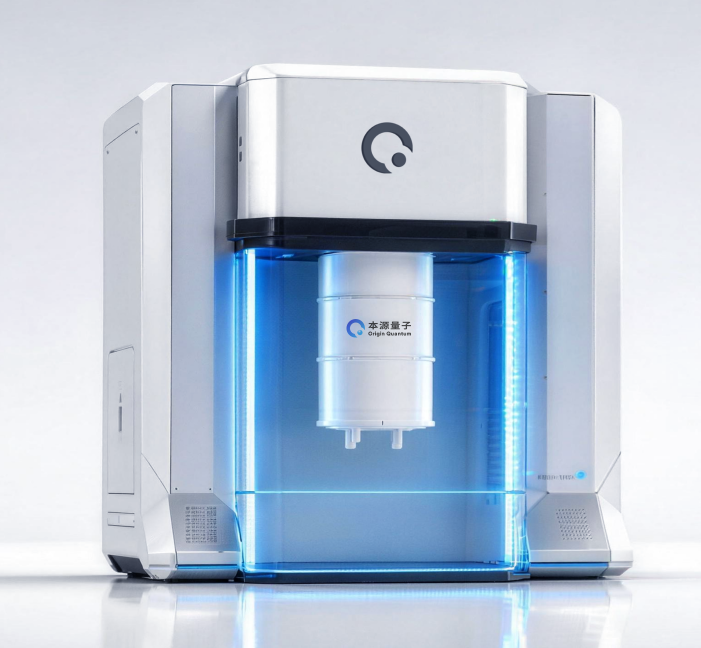
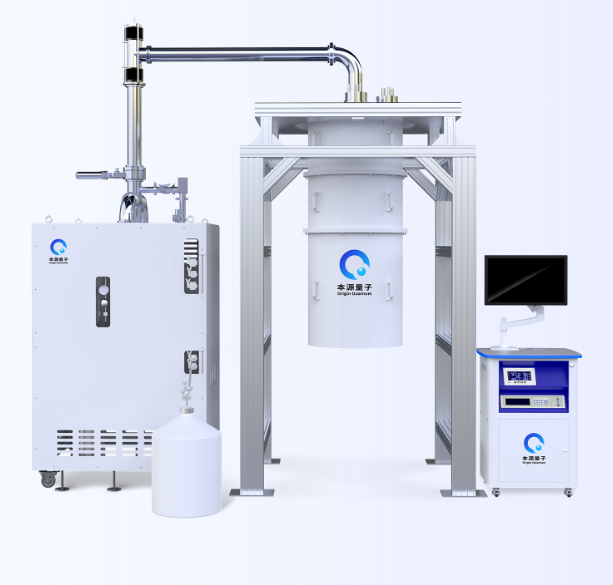
If you've ever seen a photo of a superconducting quantum computer, chances are it looked like something out of a sci-fi movie—glowing tubes, intricate wiring, and often encased in a massive, futuristic-looking cylinder.
Yes, you read that right. Quantum computers need to be cold—extremely cold—often operating near absolute zero (about -273°C or -460°F). But why? And what happens if they're not kept icy? In this article, we'll break down the science behind why superconducting quantum computers must be kept at cryogenic temperatures, explain how temperature affects quantum states, and explore the real-world engineering challenges involved.
Heat = Noise = Quantum Chaos
At its core, quantum computing relies on quantum bits, or "qubits." Unlike classical bits (which are either 0 or 1), qubits can exist in a superposition—meaning they're both 0 and 1 at the same time. This delicate state is what gives quantum computers their immense power.
But here's the catch: qubits are incredibly fragile. Any tiny disturbance—like heat, electromagnetic radiation, or even stray vibrations—can cause them to lose their quantum state. This loss is called decoherence, and it's the #1 enemy of quantum computation.
Heat, in particular, introduces thermal noise—random jiggling of atoms and electrons—that disrupts the precise quantum states needed for calculations. To prevent this, scientists cool quantum processors to temperatures so low that atomic motion nearly stops.
Think of it like trying to balance a pencil perfectly on its tip. In a warm room, air currents, vibrations, and even your breath will knock it over instantly. But in a perfectly still, ultra-cold vacuum? It might just stay upright long enough to do something useful.
How Cold Is "Cold Enough"? A Temperature Comparison
| Environment | Temperature (°C) | Temperature (Kelvin) |
|---|---|---|
| Room temperature | ~25°C | ~298 K |
| Liquid nitrogen (used in labs) | -196°C | 77 K |
| Outer space (cosmic background) | -270°C | ~3 K |
| Quantum computer operating temp | -273.14°C | ~0.01–0.1 K |
As you can see, quantum computers operate at temperatures just hundredths of a degree above absolute zero—colder than the vacuum of deep space. This extreme cold is achieved using dilution refrigerators, specialized cryogenic systems
Why Heat Destroys Quantum States
To understand why cold matters, let's look at the physics:
-
Thermal Energy vs. Qubit Energy Gap
Qubits rely on tiny energy differences between quantum states. At room temperature, thermal energy (~25 meV) is much larger than the energy gap of a typical superconducting qubit (~0.0001 meV). This means heat easily flips qubits randomly, destroying information. -
Decoherence Time Plummets with Heat
Decoherence time—the window during which a qubit stays usable—drops dramatically as temperature rises. At 15 mK (millikelvin), coherence might last 100 microseconds. At 1 K? It could be less than a nanosecond—too short for any meaningful computation. -
Superconductivity Requires Cold
Most leading quantum computers use superconducting qubits, which only work when their circuits are superconducting (i.e., zero electrical resistance). This only happens at cryogenic temperatures. No cold = no superconductivity = no qubits.
Types of Qubits and Their Cooling Needs
| Qubit Type | Typical Operating Temp | Why It Needs Cold |
|---|---|---|
| Superconducting | 10–15 mK | Requires superconductivity; highly sensitive to thermal noise |
| Trapped Ion | Room temp (ions), but lasers/electronics cooled | Ions themselves can be room-temp, but supporting systems often require cooling for stability |
| Silicon Spin | ~100 mK | Electron spins decohere rapidly with heat |
The Engineering Challenge: Building a Quantum Fridge
Keeping something colder than space isn't easy. Here's what goes into it:
- Dilution Refrigerators: Multi-stage systems that use liquid helium-3 and helium-4 to progressively cool components.
- Shielding: Layers of metal and magnetic shielding block external heat and electromagnetic interference.
- Vibration Isolation: Even tiny shakes can disrupt qubits, so systems are mounted on shock-absorbing platforms.
- Wiring Complexity: Every wire entering the fridge brings heat. Engineers use special filtered, attenuated lines to minimize this.
All of this makes quantum computers expensive, bulky, and power-hungry—given their potential to solve problems in seconds that would take classical supercomputers millennia.
Try our Superconducting Quantum Computer to run circuits on real superconducting hardware.Stay curious
Contact Us
 (+86) 177 3001 9472
 market@originqc.com