What Is Quantum Noise? A Beginner's Guide to the Basics
Think of the static crackling between radio stations. You can tune your antenna, boost the signal, or move away from interference sources—and eventually the noise fades. Quantum noise refuses to cooperate. Cool your detector to a fraction of a degree above absolute zero, shield it behind meters of lead, and the static persists. It is woven into the fabric of reality itself.
This stubbornness makes quantum noise both the greatest obstacle to building useful quantum computers and, surprisingly, one of nature's most valuable resources. Understanding what is quantum noise—and where it comes from—requires drawing a sharp line between the noise we already know and the noise that only appears when physics gets truly strange.
Classical Noise vs. Quantum Noise: Why Cooling Things Down Isn't Enough
Every electronic device you own generates thermal noise, also called Johnson-Nyquist noise. Electrons jiggle because they carry thermal energy. The hotter the conductor, the more violently they rattle, and the more random voltage fluctuations appear across your circuit. This is classical noise in its purest form.
The fix is intuitive: cool things down. Reduce the temperature, reduce the atomic jostling, reduce the noise. Engineers have exploited this principle for decades. Radio telescopes chill their receivers to a few kelvin. Superconducting sensors operate below one kelvin. The strategy works beautifully—until you hit a floor.
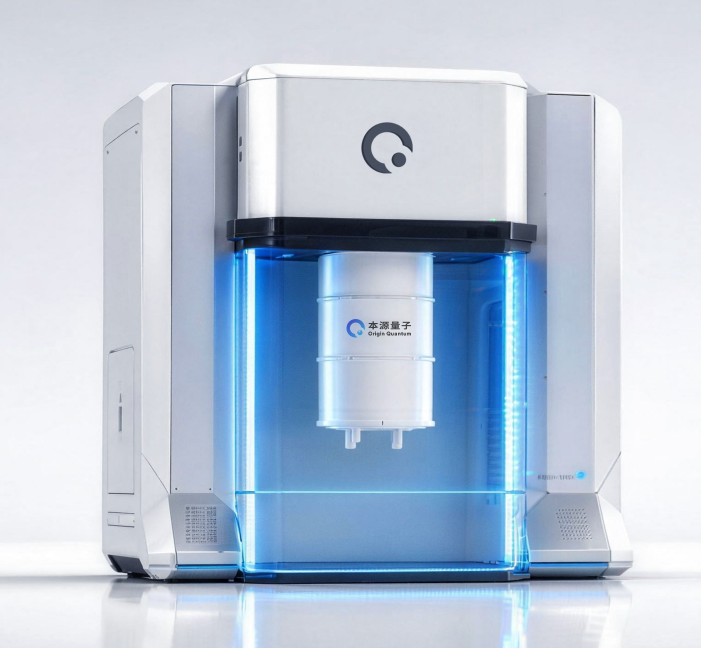
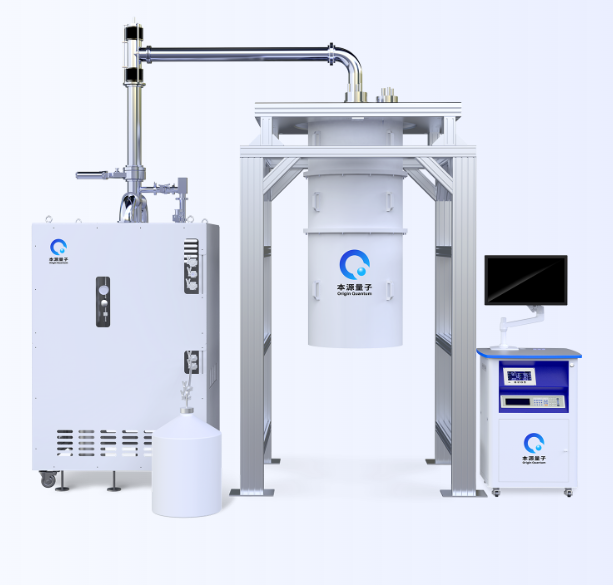
That floor is quantum noise. Even at 15 millikelvin—the operating temperature inside a dilution refrigerator housing a superconducting quantum processor—residual fluctuations refuse to vanish. They originate not from thermal agitation but from the Heisenberg uncertainty principle and from the quantum vacuum itself. You cannot cool away what temperature never created.
The distinction matters enormously for anyone building or studying quantum hardware. Here is a side-by-side comparison:
| Dimension | Classical Noise | Quantum Noise |
|---|---|---|
| Root Cause | Thermal agitation of charge carriers (electrons, phonons) | Heisenberg uncertainty principle; zero-point energy; environmental entanglement |
| Temperature Dependence | Scales with temperature; vanishes as T → 0 K | Persists at T = 0 K; irreducible by cooling alone |
| How It Affects Information | Adds random voltage/current fluctuations to classical signals | Randomizes qubit phase, flips qubit states, destroys superposition and entanglement |
| Typical Mitigation | Cooling, shielding, filtering, averaging | Quantum error correction, dynamical decoupling, squeezed states, topological protection |
Notice the last row. Classical noise yields to brute-force engineering. Quantum noise demands entirely different weapons—ones that respect the rules of quantum mechanics rather than fighting them.
Where Does Quantum Noise Actually Come From?
Quantum noise is not a single phenomenon. It arrives through two distinct channels, and conflating them leads to sloppy thinking. The first channel is intrinsic—baked into the mathematics of quantum theory. The second is extrinsic—imposed by an environment that refuses to leave a quantum system alone.
Intrinsic Quantum Fluctuations (The Heisenberg Tax)
The Heisenberg uncertainty principle states that certain pairs of physical quantities—position and momentum, energy and time—cannot both be pinned down with arbitrary precision simultaneously. This is not a limitation of our instruments. It is a statement about what nature permits.
One consequence: a quantum field can never sit perfectly still. Even in its lowest-energy state, the electromagnetic field retains zero-point energy, producing tiny fluctuations in electric and magnetic field strength. These vacuum fluctuations are real. They exert measurable forces (the Casimir effect) and set a fundamental noise floor for any optical or microwave measurement.
A closely related manifestation is shot noise. Picture rain hitting a tin roof: while the average downpour is steady, the exact number of droplets striking the metal every millisecond fluctuates randomly. In electronics, this statistical jitter stems from the discrete nature of electrons. In quantum optics, however, shot noise is fundamentally tied to vacuum fluctuations beating against coherent signals—forming a noise floor that, together with quantum backaction, defines the Standard Quantum Limit (SQL).
These intrinsic fluctuations set hard limits on measurement precision. No engineer, no matter how clever, can design a detector below this floor without resorting to exotic tricks like squeezed states.
Environmental Decoherence (The Eavesdropping Universe)
When quantum computing engineers say "quantum noise," they usually mean something more specific: decoherence. A qubit in superposition is extraordinarily fragile. Any uncontrolled interaction with the outside world—stray microwave photons, cosmic rays, vibrating atoms in the substrate (phonons), magnetic impurities—acts like an unwanted measurement.
The environment "peeks" at the qubit. That peek entangles the qubit with billions of environmental degrees of freedom. The delicate phase relationships that encode quantum information bleed out into the surroundings, and the qubit collapses from a coherent superposition into a classical mixture. The information is not destroyed in a thermodynamic sense—it has leaked into correlations too complex to recover.
Decoherence times in today's superconducting qubits range from tens to hundreds of microseconds. Trapped-ion systems push into milliseconds. These numbers sound generous until you realize that a single quantum gate operation takes 10 to 100 nanoseconds. You get perhaps a few thousand operations before noise swallows the computation whole.
That single stray photon ruins everything.
How Quantum Noise Breaks Quantum Computers: T1 and T2 Explained Simply
Quantum noise attacks qubits through two primary error channels, each with its own characteristic timescale. Understanding these timescales—T1 and T2—is essential for grasping why quantum computers remain so difficult to scale.
Imagine a spinning coin. While it spins, it encodes information in its orientation. Quantum noise can knock the coin flat (energy loss) or wobble its spin axis without toppling it (phase scrambling). These two failure modes map directly onto the two relaxation times:
- Amplitude Damping / Energy Relaxation (T1): The qubit leaks energy to its environment and decays irreversibly from the excited state |1⟩ back to the ground state |0⟩ along the z-axis of the Bloch sphere. While often mapped to bit-flip errors in error-correcting models, it is fundamentally an irreversible dissipative process. In superconducting transmon qubits, T1 typically sits between 50 and 300 microseconds.
- Phase Damping / Dephasing (T2): The qubit retains its energy, but the relative quantum phase between the |0⟩ and |1⟩ components of the superposition randomizes across the equator of the Bloch sphere. This eliminates quantum interference—the foundational engine of quantum speedup. The dephasing time satisfies the fundamental inequality T2 ≤ 2T1, and is routinely degraded by low-frequency magnetic fluctuations (1/f noise).
Beyond T1 and T2, two additional noise mechanisms plague real quantum processors. Crosstalk occurs when a control pulse intended for one qubit inadvertently nudges a neighbor. Gate infidelity arises because the microwave or laser pulses used to manipulate qubits are never perfectly shaped; tiny amplitude or timing errors accumulate over thousands of gates, scrambling the final result.
Together, these noise sources impose a "noise budget" on every quantum circuit. Exceed it, and the output becomes indistinguishable from random coin flips.
How Scientists Tame Quantum Noise
You cannot eliminate quantum noise. The uncertainty principle forbids it. But you can suppress, redirect, and correct its effects. Researchers attack the problem at three levels, moving from hardware to software.
Physical isolation and cryogenic shielding. The first line of defense is brute-force separation. Superconducting qubits live inside dilution refrigerators at 10–15 millikelvin, surrounded by layers of magnetic shielding, infrared filters, and vibration-damping stages. Each layer strips away one more noise channel. Cosmic-ray events remain stubbornly difficult to block, and recent work has shown they can corrupt multiple qubits simultaneously—a problem called correlated errors.
Quantum error mitigation. In the current NISQ (Noisy Intermediate-Scale Quantum) era, full error correction is too expensive. Instead, researchers use statistical techniques: run the same circuit many times at varying noise levels, then extrapolate back to the zero-noise limit. Methods like zero-noise extrapolation and probabilistic error cancellation squeeze useful answers out of noisy hardware without requiring extra qubits.
Quantum error correction (QEC) is the definitive long-term solution, encoding one protected logical qubit across an array of entangled physical qubits. Using topological surface codes, local errors can be detected via stabilizer measurements without collapsing the logical state. In a landmark 2023 experiment, Google Quantum AI demonstrated that scaling a surface code from 17 physical qubits (distance-3) to 49 physical qubits (distance-5) measurably reduced logical error rates. Subsequent milestones by neutral-atom and trapped-ion architectures—demonstrating tens of entangled, error-detected logical qubits—have further proved that error suppression scales with hardware size. However, reaching commercially fault-tolerant thresholds will still demand hundreds to thousands of physical qubits per logical qubit.
Is Quantum Noise Always the Villain?
Here is the twist that surprises most people. Quantum noise is not purely destructive. In quantum random number generators (QRNGs), engineers deliberately harvest vacuum fluctuations or photon-detection shot noise to produce bit strings that are provably random—no algorithm, no hidden variable, no predictability. These generators underpin high-security cryptographic systems used by governments and financial institutions.
In gravitational-wave observatories like LIGO, quantum noise sets the sensitivity floor. Physicists combat it by injecting squeezed light—a specially engineered quantum state that redistributes uncertainty between phase and amplitude. By squeezing noise out of the measurement quadrature, LIGO has extended its detection range by roughly 40%, catching more black-hole mergers than ever before. The noise did not disappear. It was simply moved somewhere harmless.
Frequently Asked Questions About Quantum Noise
Can quantum noise be completely eliminated?
No. Quantum noise rooted in the Heisenberg uncertainty principle is a fundamental feature of nature, not an engineering defect. You can suppress its effects through error correction, squeezing, or clever measurement design, but you cannot reduce it below the quantum limit without violating the laws of physics.
What is the difference between quantum noise and decoherence?
Quantum noise is the broader category encompassing all irreducible fluctuations at the quantum level. Decoherence is a specific consequence: the loss of quantum coherence when a system becomes entangled with its environment. Think of quantum noise as the cause and decoherence as one of its most damaging effects on quantum information.
How does quantum noise affect everyday electronics?
For most consumer devices, quantum noise is negligible compared to thermal noise. However, in ultra-sensitive instruments—radio telescopes, superconducting sensors, and cutting-edge photodetectors—quantum noise sets the ultimate sensitivity floor. As transistors shrink toward atomic scales, shot noise and tunneling noise become increasingly relevant to chip designers.
Contact Us
 (+86) 177 3001 9472
 market@originqc.com