What Is Quantum Coherence? Definition, Physics & Examples
Quick Summary: Quantum coherence is the property of a quantum system where the phase relationship between different states in a superposition remains stable and predictable over time. It allows quantum states to constructively or destructively interfere, serving as the essential foundation for quantum computing operations, quantum entanglement, and quantum sensing.
Imagine a hundred violinists tuning their instruments before a concert. At first, the sound is chaos—screeching, overlapping, directionless. Then the concertmaster raises her bow. One by one, the players lock onto the same pitch, the same phase. Suddenly, the noise becomes music. That moment of lockstep alignment? That is quantum coherence in a nutshell.
At its core, quantum coherence describes a fixed, well-defined phase relationship between the components of a quantum superposition. When a particle exists in a superposition of states—say, simultaneously "here" and "there"—coherence is the invisible thread that keeps those possibilities synchronized, like dancers who never miss a beat relative to one another. Lose that thread, and the superposition collapses into a boring classical coin flip.
Here is the catch: coherence is absurdly fragile. A stray photon, a thermal vibration, even the act of looking at the system can shatter it. And yet, without coherence, there is no quantum computing, no quantum sensing, no quantum advantage of any kind. It is the single most coveted and most endangered resource in modern physics.
Waves, Phases, and Perfectly Timed Steps
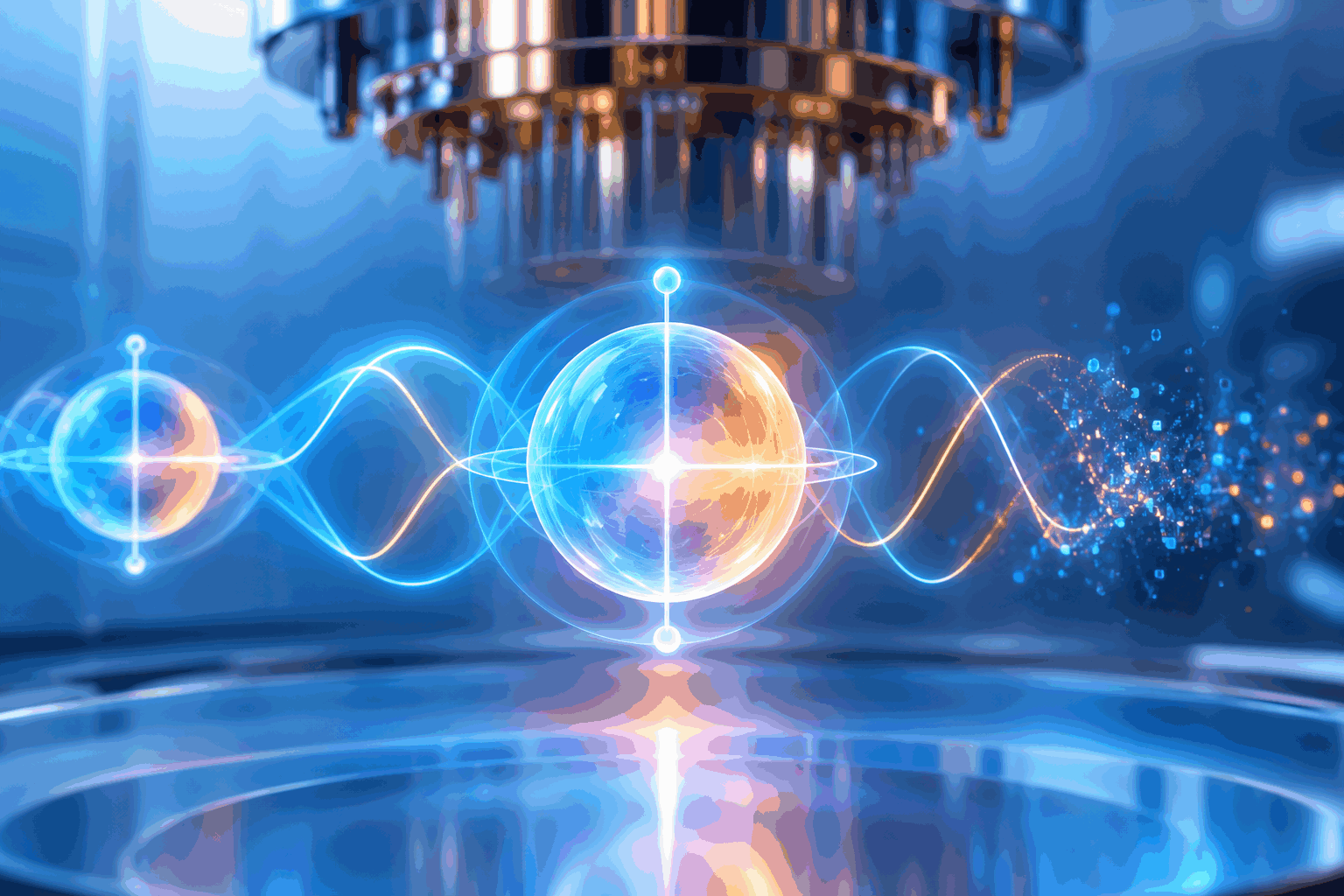
Let's cut through the math for a second. Every quantum object carries a wavefunction—a mathematical object with an amplitude and a phase. The phase tells you where the wave "is" in its oscillation cycle: crest, trough, or somewhere in between. When two or more quantum states share a stable, predictable phase relationship, we say they are coherent.
Think of it this way. Drop two pebbles into a still pond. Each generates circular ripples. Where crest meets crest, the water surges upward—constructive interference. Where crest meets trough, they cancel—destructive interference. The interference pattern only exists because the two ripple sources maintain a fixed phase relationship. That is coherence doing its job.
The double-slit experiment is the canonical demonstration. Fire single photons at a barrier with two narrow slits. Each photon passes through both slits simultaneously (superposition), and the two "paths" interfere with each other on the detection screen, painting a striped pattern. Now, place a detector at one slit to determine which path the photon took. The moment you extract that which-path information, the phase relationship between the two paths becomes randomized. The stripes vanish. Coherence is gone, and the photon behaves like a classical bullet.
This reveals a deep truth: superposition without coherence is useless. A qubit in a superposition of |0⟩ and |1⟩ only performs quantum computation if the relative phase between those two basis states is well-defined and controllable. Strip away coherence, and you are left with a classical random number generator wearing a quantum costume.
Coherence vs. Entanglement vs. Decoherence
These three terms get tangled together in popular science writing constantly. Let's separate them cleanly.
Coherence refers to the phase stability across the states of a quantum system. While it fundamentally manifests within a single degree of freedom (such as a single qubit in a superposition of |0⟩ and |1⟩ without needing a second particle), coherence also governs collective, multi-partite systems where definite phase relations drive wave interference.
Quantum Entanglement is a property of a composite system. It describes non-classical correlations between two or more subsystems such that the state of one cannot be described independently of the other. Entanglement requires coherence to exist, but coherence does not require entanglement. A single isolated qubit in a pure superposition is perfectly coherent yet not entangled with anything.
Decoherence is the process by which coherence is destroyed. It occurs when a quantum system becomes entangled with its environment, leaking phase information outward until the system's internal phase relationships become effectively random.
| Dimension | Quantum Coherence | Quantum Entanglement | Decoherence |
|---|---|---|---|
| Physical Meaning | Fixed phase relationship within a superposition of a single system | Non-separable correlations between two or more subsystems | Loss of phase information due to environmental interaction |
| Core Mechanism | Phase stability of the wavefunction components | Tensor-product structure of joint Hilbert space; Bell-state correlations | System-environment entanglement; information leakage to uncontrolled degrees of freedom |
| Vulnerability to Environment | Extremely fragile; any uncontrolled interaction randomizes phase | Equally fragile; entangled states decohere even faster than single-qubit superpositions | Is itself the vulnerability mechanism; driven by thermal noise, measurement, stray fields |
| Role in Quantum Computing | Prerequisite for any quantum gate operation; defines the computational window | Enables multi-qubit algorithms (Shor, Grover); resource for teleportation and error correction | The primary obstacle; sets the hard deadline for useful computation |
How Quantum Decoherence Ruins the Party
Decoherence is not some exotic failure mode. It is the default outcome of reality. The universe is warm, noisy, and full of things that bump into your qubit.
The mechanism is deceptively simple. Your qubit starts in a clean superposition: α|0⟩ + β|1⟩, with a well-defined relative phase. Then a stray thermal photon scatters off it. Or a neighboring nuclear spin flips. Or a cosmic ray deposits energy nearby. Each interaction entangles the qubit with some environmental degree of freedom, effectively "measuring" it without anyone in a lab coat pressing a button. The phase information leaks into the environment, becomes scrambled across billions of uncontrolled variables, and is lost for all practical purposes.
The cruel irony: the very act of observing a quantum system to confirm its coherence is itself a decoherence event. You cannot verify the phase without disturbing it. Physicists must infer coherence indirectly, through interference experiments or Ramsey fringe measurements, always skating on the edge of destruction.
Real-world destroyers include thermal vibrations (phonons) in the substrate, fluctuating magnetic fields from nearby electron spins, charge noise in semiconductor devices, and even blackbody radiation at room temperature. Every one of these channels provides a pathway for phase information to escape.
Why Quantum Coherence Dictates the Future of Computing
In quantum computing, coherence is not a nice-to-have. It is the entire game. Two timescales govern everything:
- T₁ (energy relaxation time): How long a qubit stays in its excited state |1⟩ before spontaneously decaying to the ground state |0⟩. Think of it as the qubit "forgetting" its energy. T₁ sets the upper bound on how long any quantum information can survive.
- T₂ (dephasing/transverse relaxation time): How long the relative phase between |0⟩ and |1⟩ remains predictable. The theoretical ceiling is bounded by T₂ ≤ 2T₁, but in experimental systems, pure dephasing (represented by 1/Tφ) causes the observable coherence time (T₂*) to be significantly shorter due to low-frequency magnetic fluctuations and charge noise.
Every quantum gate operation takes a finite time—typically tens to hundreds of nanoseconds for superconducting qubits. If your T₂ is 100 microseconds, you can fit roughly a thousand gate operations before the phase information becomes garbage. That is your entire computational budget. Run out of coherence, and the output is indistinguishable from random noise.
This is why the NISQ (Noisy Intermediate-Scale Quantum) era is so frustrating. Companies race to announce 1,000-qubit or 10,000-qubit processors, but if each qubit's coherence time is short and error rates are high, adding more qubits just gives you a larger machine that produces garbage faster. Coherence time, not qubit count, is the hard currency of quantum computing.
Quantum Coherence in Warm, Wet Biology
For decades, the consensus was blunt: biological systems are too warm, too wet, and too messy to sustain quantum coherence for any meaningful duration. Decoherence times at room temperature in aqueous environments were expected to be femtoseconds—far too short to matter.
Then came the FMO complex.
The Fenna-Matthews-Olson complex is a light-harvesting protein in green sulfur bacteria. In 2007, groundbreaking two-dimensional electronic spectroscopy experiments published in Nature revealed oscillatory signals consistent with electronic coherence persisting for hundreds of femtoseconds—and later studies suggested coherence signatures lasting picoseconds even at physiological temperatures. The exciton (an excited electronic state) appears to explore multiple energy-transfer pathways simultaneously via a quantum walk, arriving at the reaction center with near-unity efficiency. Coherence, even if brief, may act as a computational shortcut that classical hopping cannot replicate.
The debate is not settled. Some researchers argue the observed oscillations reflect vibrational rather than electronic coherence. But the mere possibility has shattered the old dogma.
Then there is the European robin. These birds navigate using Earth's magnetic field with astonishing precision. The leading hypothesis involves cryptochrome proteins in the bird's retina, where photon absorption creates a radical pair whose spin state is sensitive to magnetic field orientation. For this mechanism to work, the spin coherence must persist for at least microseconds—orders of magnitude longer than naive estimates would allow. Whether biology has evolved active protection mechanisms remains an open and thrilling question.
Engineering Longer Coherence Times
The battle against decoherence is the central engineering challenge of quantum technology. Three main strategies dominate:
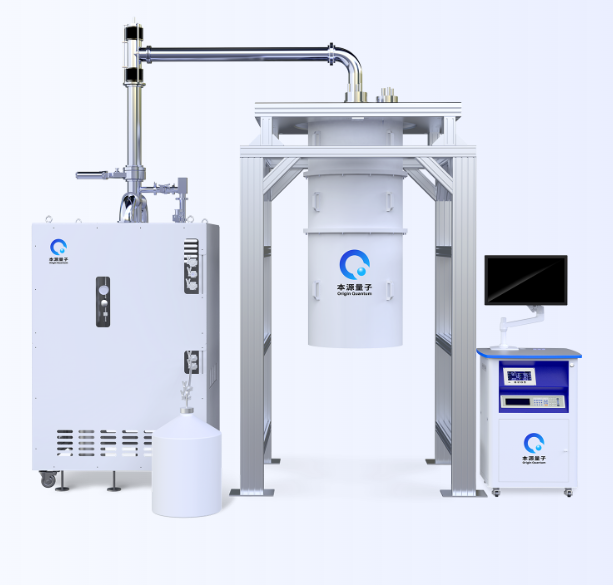
Brute-force isolation via cryogenics. Superconducting qubits operate inside dilution refrigerators at roughly 10–20 millikelvin—colder than outer space. At these temperatures, thermal photon populations are negligible, and phonon activity in the substrate is suppressed. This buys coherence times in the tens to hundreds of microseconds for transmon qubits, and even longer for certain protected designs.
Dynamical decoupling. Think of this as noise-canceling headphones for qubits. By applying carefully timed sequences of microwave or radiofrequency pulses (Carr-Purcell-Meiboom-Gill sequences, Uhrig sequences, etc.), physicists can refocus dephasing errors much like a spin-echo refocuses magnetic field inhomogeneities in NMR. The pulses effectively average out slow environmental noise, extending T₂ by factors of 10 to 1,000 depending on the noise spectrum.
Quantum error correction and topological protection. Rather than fighting decoherence on a single physical qubit, error correction encodes one logical qubit into many physical qubits. Surface codes, for instance, can detect and correct errors as long as the physical error rate stays below a threshold (roughly 1%). Topological approaches go further, encoding information in global properties of a system that are inherently immune to local perturbations. Microsoft's pursuit of Majorana-based topological qubits is one high-profile example, though experimental validation remains elusive.
From Fragile Waves to Real-World Mastery
Quantum coherence has traveled a long arc. It began as a curious feature of interference experiments in the early twentieth century. It became the conceptual backbone of quantum information theory in the 1990s. Today, it is the metric by which billion-dollar quantum hardware programs live or die.
The next decade will likely see coherence times pushed into the millisecond regime for superconducting qubits, and possibly beyond for trapped ions and neutral atoms. Quantum sensors exploiting long-lived coherence states are already outperforming classical instruments in magnetometry, gravimetry, and timekeeping. Optical lattice clocks, which leverage coherence in strontium atoms, now achieve fractional uncertainties below 10⁻¹⁸—sensitive enough to detect the gravitational redshift from a height difference of one centimeter.
For fault-tolerant quantum computing, the path is clear in principle but brutal in practice: extend coherence, reduce gate errors below threshold, and scale. No one said taming the quantum world would be easy. But every microsecond of coherence gained is a small victory over the thermodynamic indifference of the universe—and each one brings us closer to machines that can do things no classical computer ever will.
Frequently Asked Questions About Quantum Coherence
What is the difference between quantum coherence and superposition?
Superposition is the ability of a quantum system to exist simultaneously in multiple states (e.g., |0⟩ and |1⟩). Quantum coherence is the fixed phase relationship between those states. Without coherence, a superposition state collapses into a probabilistic classical mixture, making quantum computation impossible.
Can quantum coherence exist at room temperature?
Yes. The most prominent technological example is the nitrogen-vacancy (NV) center in diamond, which exhibits electron spin coherence times exceeding several milliseconds at room temperature due to its rigid crystal lattice. While ambient thermal noise typically destroys coherence in femtoseconds, specific solid-state defects and biological systems (such as cryptochrome proteins in avian magnetoreception) have evolved or engineered ways to protect phase coherence without cryogenic cooling.
Why is coherence time so critical for quantum computers?
Coherence time (specifically T₂) defines the operational window during which quantum gates can be executed. If an algorithm requires 5,000 gate operations and your qubits lose coherence after 500 operations, the calculation will yield purely random noise instead of meaningful data.
Contact Us
 (+86) 177 3001 9472
 market@originqc.com