What Are Quantum Algorithms? The Ultimate Guide to the Core 4
Think of a quantum algorithm as a custom blueprint designed to run on quantum hardware. Instead of standard digital logic, it taps into quantum mechanics—specifically superposition and entanglement—to tackle highly complex equations exponentially faster than any modern supercomputer. No, it won't make your everyday web browsing faster. But it can solve math problems that would stall today's fastest supercomputers for millennia, finishing the job before your morning coffee gets cold. If you've tried reading about quantum technology before, technical jargon like qubits, entanglement, or superposition probably felt like reading a foreign language. Let's break it down simply.
How Is a Quantum Algorithm Different from a Regular One?
The software on your smartphone, laptop, or Netflix's streaming servers runs on regular algorithms. These rely on classical bits. Think of a bit as a simple binary switch—it's either 0 or 1, on or off, with no in-between. To get anything done, your computer has to flip billions of these microscopic switches in the correct sequence at incredible speeds.
A quantum algorithm operates on an entirely different plane using qubits (quantum bits). Qubits don't play by classical rules.
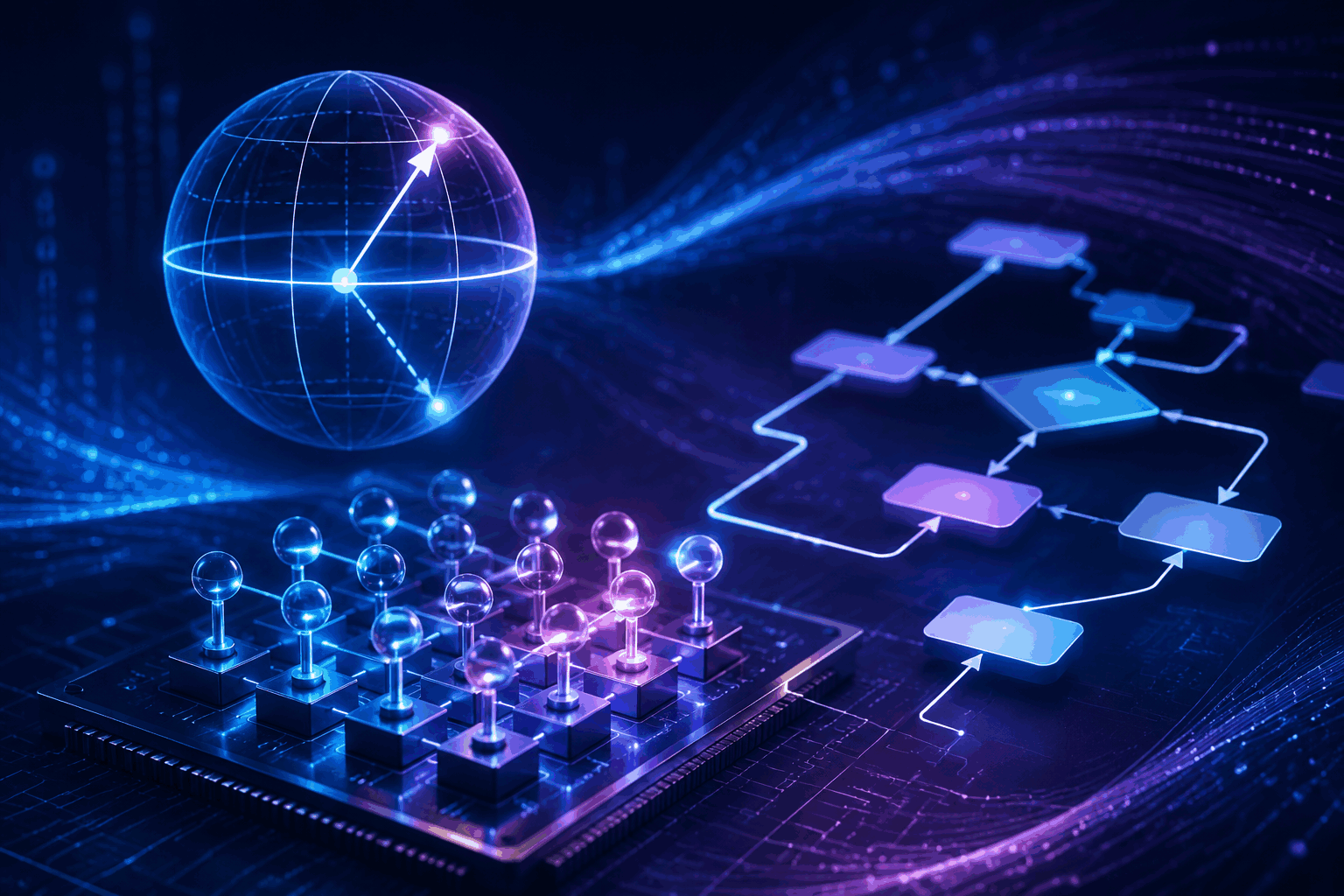
This comes down to superposition. Unlike a standard bit, a qubit doesn't have to choose between 0 and 1 immediately. Instead, it exists in a fluid blend of both states at once—right up until you measure it. Picture a coin spinning on a tabletop. While it's in motion, is it heads or tails? It's essentially a blur of both possibilities. That spinning state is what superposition looks like in the real world.
Next is entanglement. When you entangle two qubits, they form a deep, unbreakable connection. If you measure one, you immediately know what the other is doing—even if they're separated by light-years. Einstein found this so bizarre he famously labeled it "spooky action at a distance." (Keep in mind: while this link is instantaneous, the physical No-Communication Theorem prevents us from using entanglement to send actual data faster than the speed of light).
By leveraging these two phenomena, a quantum algorithm processes complex data through parallel paths that standard machines can't even see. This isn't just about raw speed; it's a completely reimagined way of processing information.
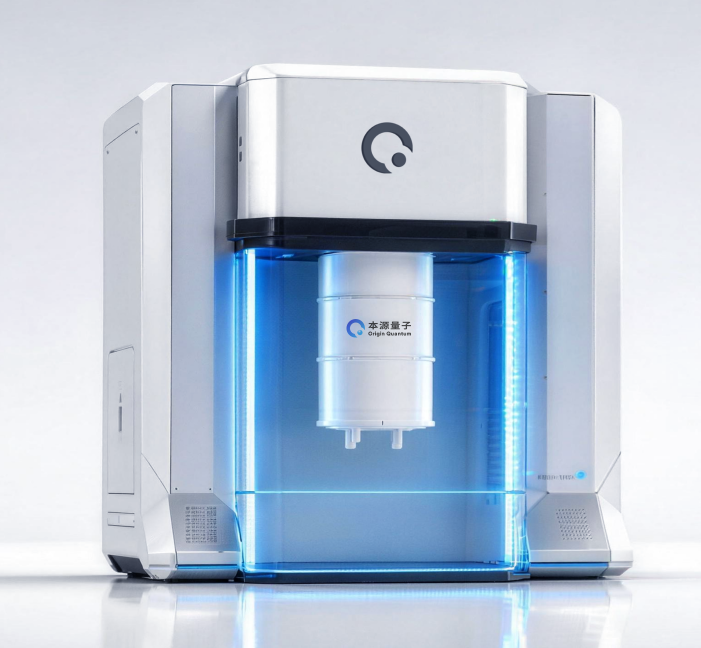
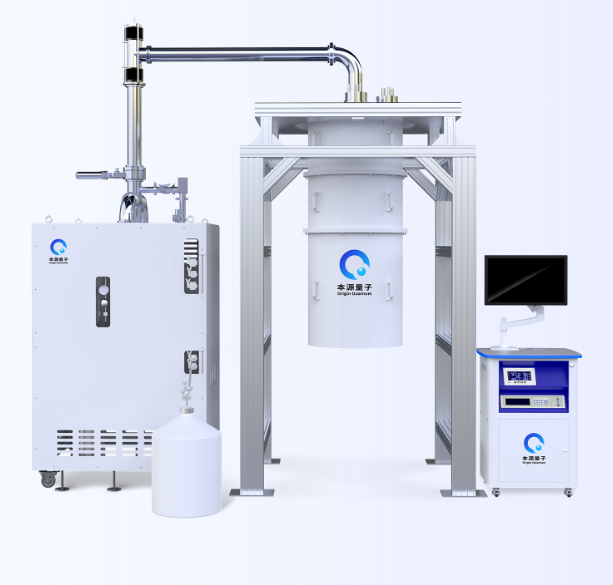
Let's clear up one major misconception: the algorithm is not the machine. The physical computer—with its massive cryogenic cooling systems and sensitive chips—is just the hardware. The algorithm is the recipe. Just as a brilliant recipe helps a chef turn basic ingredients into a Michelin-starred meal, a smart quantum algorithm is what lets these machines solve impossible math. A bad algorithm, on the other hand, just produces useless noise.
Four Classic Quantum Algorithms
1. Grover's Search Algorithm — Quadratic Speedup for Unstructured Data
Imagine trying to find a single contact, "John Smith," in an old, printed phone book with one million entries sorted in absolute, random order. Classic computers have to scan this page by page. Statistically, you'd have to check about 500,000 names before hitting the right one. If you're unlucky, you'll have to read all one million.
In 1996, computer scientist Lov Grover proposed a much faster way in his landmark paper: Grover's search algorithm.
Instead of going line by line, Grover's method uses superposition to look at multiple options simultaneously. It then relies on a mathematical process called amplitude amplification—essentially turning up the volume on the correct answer while tuning out the wrong ones.
The math is staggering. For a million-entry list, Grover's algorithm nails the target in just 1,000 steps instead of half a million. Scale that up to a billion entries, and the work drops from 500 million steps to just 31,600.
There is a catch, though. This quadratic speedup is incredible, but running it on real databases requires converting normal digital data into quantum states. That means we need advanced quantum RAM (qRAM)—which remains a major engineering hurdle today.
Here is a quick look at how Grover's quadratic speedup compares against traditional search methods as data grows:
| Dataset Size (N) | Average Classical Search (N/2) | Grover's Method (√N) | Calculated Speedup |
|---|---|---|---|
| 10,000 | 5,000 checks | 100 checks | 50× |
| 1,000,000 | 500,000 checks | 1,000 checks | 500× |
| 1,000,000,000 | 500,000,000 checks | ~31,623 checks | ~15,811× |
2. Shor's Factoring Algorithm — The Cryptographic Disrupter
While Grover's approach offers a solid speed boost, Shor's algorithm is the computational sledgehammer that has cybersecurity experts sweating.
Nearly all modern web security—from bank transfers to private chats—uses RSA encryption. RSA works because of an easy-one-way, hard-the-other math puzzle: multiplying two giant prime numbers is incredibly easy, but reversing that process (finding those prime factors) is virtually impossible for a standard computer when the final number is hundreds of digits long.
That security model cracked in 1994. Mathematician Peter Shor introduced his factoring algorithm, showing that by utilizing a specialized quantum tool called the Quantum Fourier Transform (QFT), a quantum system could break down these massive numbers in a fraction of the time it takes classic supercomputers.
Think of a standard supercomputer as a lockpicker testing billions of combinations one at a time. Shor's algorithm bypasses that entirely. It studies the mathematical pattern of the lock itself, letting it generate the right key almost immediately.
This looming threat is why cybersecurity teams globally are shifting to Post-Quantum Cryptography (PQC)—a new class of defenses engineered to withstand both digital and quantum-based attacks.
3. VQE Algorithm — The Practical Chemistry Simulator of the NISQ Era
Shor's math needs pristine, error-free hardware we don't have yet. But the Variational Quantum Eigensolver (VQE) is already at work on today's early, noisy systems.
Modeling molecules is a nightmare for standard supercomputers. Electrons interact using complex quantum physics, and as a molecule grows, the computational demands skyrocket. Even mapping a relatively basic molecule like caffeine down to its exact quantum behavior is too complex for our best classic machines.
VQE gets around this by acting as a hybrid classical-quantum algorithm. It divides and conquers:
- The Quantum Processor: Maps out and measures the actual quantum states of the physical molecule.
- The Classical Coprocessor: Takes those measurements and fine-tunes the mathematical parameters to find the lowest energy state.
By looping back and forth, the system calculates a molecule's ground-state energy with incredibly high precision. Since VQE handles noise exceptionally well, it is our best shot at near-term breakthroughs in clean energy, battery design, and pharmaceuticals using today's Noisy Intermediate-Scale Quantum (NISQ) computers.
4. QAOA Algorithm — The "Super-Scheduler" Tackling Impossible Logistics
If VQE is built for chemical design, the Quantum Approximate Optimization Algorithm (QAOA) is the go-to tool for logistics and finance. Created in 2014 by physicist Edward Farhi and his team at MIT, QAOA targets complex "combinatorial optimization" problems.
Take the famous Traveling Salesman Problem. Say a driver has to visit 50 cities using the shortest path. It sounds simple, but as you add stops, the possible routes multiply exponentially. For 50 locations, the total combinations exceed the number of atoms in the known universe. A classic computer trying to brute-force every route would still be calculating long after our sun goes cold.
QAOA doesn't look for the perfect path one by one. Much like VQE, it operates as a hybrid system designed to make the most of current, noisy NISQ hardware:
- The Quantum Processor: Takes the constraints of the problem (such as delivery routes or investment risk limits) and maps them onto interacting qubits. This uses superposition to look at the entire landscape of options at once.
- The Classical Optimizer: Evaluates the initial results, tweaks the settings, and sends them back to the quantum hardware. This loop repeats, slowly shaping the quantum state until it lands on a great solution.
The real magic of QAOA is practicality. In actual logistics or finance, you don't need a mathematically perfect route down to the millimeter; you need a highly efficient, "great" solution fast. QAOA is built to deliver these close-to-perfect answers in record time.
Why Can't We Use Quantum Algorithms for Everyday Tasks?
It is important to remember that quantum machines aren't just "super-fast laptops." They are built differently. Here are three big reasons why we won't see quantum algorithms running your daily apps anytime soon:
- Quantum Decoherence (Noise): Qubits are incredibly fragile. The slightest temperature shift, stray electromagnetic wave, or tiny vibration can destroy their quantum state, ruining the entire calculation.
- Short Coherence Times: Qubits can only stay in superposition for fractions of a second. If an algorithm takes longer than this tiny window to run, the data simply collapses back into random noise.
- The Error Correction Problem: Running something like Shor's algorithm to crack encryption requires thousands of highly stable "logical qubits." But because physical qubits misfire so often, it takes millions of raw physical qubits just to bundle them into error-corrected units. Today's hardware is still miles away from closing this gap.
On top of that, quantum algorithms only excel at specific math problems (like finding periodic patterns or scaling up probabilities). For everyday tasks—like streaming videos, playing games, or editing photos—classical chips will always do a better job.
How Far Away Is the Quantum Algorithm Future?
Where do we stand? The evolution of quantum software is playing out across three main phases:
- The NISQ Era (Where we are now): We are living in the "Noisy Intermediate-Scale Quantum" phase. Today, researchers run algorithms like VQE on small, imperfect hardware to tackle simplified, proof-of-concept tasks in chemistry and logistics.
- The Commercial Advantage Era (Next 5 to 10 years): As we pack more qubits onto chips and get better at managing errors, quantum algorithms will start generating real business value. Expect early wins in shipping logistics, chemical research, and financial risk modeling.
- The Fault-Tolerant Era (10+ years out): Large, fully error-corrected systems capable of running Shor's algorithm are still quite a way off. However, the software logic and the post-quantum defenses to stop them are already being put into place today.
Contact Us
 (+86) 177 3001 9472
 market@originqc.com