China Quantum Computer Breakthrough 2026: 3 New Machines Live
Something monumental happened in May 2026. China did not just roll out one new quantum computer; it launched three—all at once—across three completely different technology routes. The global scientific and tech communities are still processing what this rapid convergence means for the future of computation.
"China quantum computer" has rapidly become one of the most highly searched terms in the science and tech sectors this year, and for very good reason.

The May 2026 Breakthrough
For years, the global narrative was straightforward: the United States led in quantum hardware development, while China was playing catch-up. However, in May 2026, three Chinese quantum computers went live almost simultaneously. Each machine represents a distinct physical approach to quantum information processing: photonic, superconducting, and neutral atom.
Here is a quick technical overview of these 2026 flagships:
| Machine (Entity) | Technical Route | Key Specifications | Biggest May 2026 Breakthrough |
|---|---|---|---|
|
Jiuzhang 4.0 Developed by USTC |
Photonic | 3,050 photons detected, 8,176 interferometric modes, 1,024 squeezed-state inputs | First scale-up of a fully programmable photonic quantum computing prototype |
|
Origin Wukong-180 Developed by Origin Quantum |
Superconducting | 180 computational qubits (plus 251 coupling qubits) | Deep integration into commercial AI and machine learning ecosystems |
|
Hanyuan-2 Developed by CAS Cold Atom Technology |
Neutral Atom | 200 rubidium atom qubits (dual-core configuration) | Cabinet-style room-temperature environment operation under 7kW total power |
What sets this specific milestone apart from previous scientific announcements? These are no longer mere laboratory demonstrations. They are fully operational engineering machines handling real-world computational jobs submitted by active users. The era of the "China quantum computer" being a distant future promise has transitioned into a present-tense reality.
China's Three Quantum Technology Routes Explained
While most nations focus their primary resources on a single hardware architecture, China has pursued three parallel tracks. Think of it as three distinct ways to build a vehicle—one running on electricity, one on hydrogen, and one on solar energy. Each possesses unique physical advantages. Let's analyze how they operate under the hood.
1. Photonic Quantum Computing & Jiuzhang 4.0
To visualize photonic quantum computing, imagine a maze so complex that it exists in thousands of dimensions simultaneously. Now, imagine releasing thousands of tiny particles of light into that maze at the exact same moment. As they bounce around and interact, they map out solutions to complex mathematical problems as they emerge from the other side.
In this architecture, the "particles" are photons (individual quanta of light), and the "maze" is an optical network consisting of pathways called modes.
The original Jiuzhang prototype launched in 2020 was a historic milestone but suffered from a major functional limitation: it could only perform one highly specific calculation known as Gaussian boson sampling (GBS). It was the quantum equivalent of a calculator that can multiply but cannot add or subtract.
Jiuzhang 4.0, published in the journal Nature in May 2026, completely changes this paradigm.
This upgraded system handles 1,024 quantum squeezed-state inputs across an 8,176-mode interferometric network, manipulating and detecting up to 3,050 photons simultaneously. Crucially, the defining headline feature is programmability.
This development means Jiuzhang 4.0 is no longer a single-purpose device. Researchers can now reconfigure and program its optical interferometers to solve a variety of distinct computational problems.
This architecture offers a major physical advantage: most optical components operate at room temperature without requiring helium dilution refrigerators. However, to maintain strict scientific accuracy, it is important to note that the high-efficiency Superconducting Nanowire Single-Photon Detectors (SNSPDs) at the end of the optical paths still require localized cryogenic cooling to operate near absolute zero.
2. Superconducting Quantum Computing & Origin Wukong-180
A simple way to understand a superconducting qubit is to imagine flipping a coin and slapping it flat on your hand. Once covered, the coin is definitively either heads or tails—you simply do not know which yet. That represents a classical computer bit (0 or 1).
Now, imagine that same coin spinning rapidly in mid-air. While spinning, it exists in a state that is a mathematical combination of both heads and tails simultaneously. That represents a quantum bit (qubit) in a state of superposition, holding multiple computational pathways until it is measured.
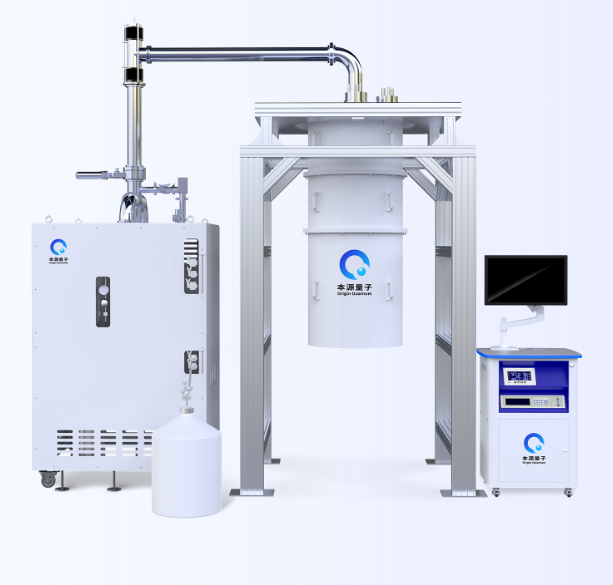
Superconducting qubits achieve this state by running electrical currents through micro-circuits cooled down to near absolute zero (approximately -273°C or 10 millikelvin). At these extreme temperatures, the circuits exhibit superconductivity and enter macroscopic quantum states.
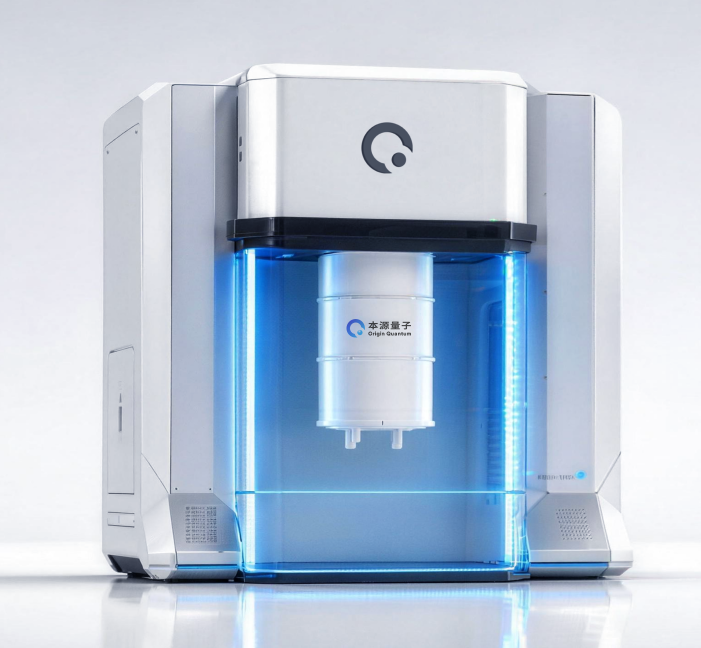
The "Wukong" series, engineered by Origin Quantum in Hefei, serves as China's premier superconducting hardware platform. Launched in May 2026, the Origin Wukong-180 packages 180 active computational qubits onto a single-core superconducting chip.
However, sheer qubit quantity is only one part of the equation. The defining feature of the Wukong-180 is its systematic integration into the modern Artificial Intelligence (AI) application ecosystem.
In practice, this integration means the quantum processor is not operating in isolation. It connects directly with classical AI development platforms via APIs and software developer kits (SDKs). Much like cloud-hosted GPUs transformed deep learning, Wukong-180 aims to make quantum-accelerated AI models accessible to developers without requiring them to own specialized quantum hardware.
Additionally, this marks the first instance of a Chinese superconducting quantum platform commercially offering cloud-based computing power to global users on an open, international scale.
3. Neutral Atom Quantum Computing & Hanyuan-2
Also debuting in May 2026, the Hanyuan-2 is China's first "dual-core" neutral atom quantum computer, developed by CAS Cold Atom Technology in Wuhan. The system traps 200 individual rubidium atoms using highly focused laser arrays (optical tweezers) and utilizes their internal atomic energy states to perform quantum gates.
The "dual-core" architecture means the computer integrates two independent, fully controllable neutral-atom qubit arrays within a single physical cabinet. Similar to multi-core classical CPUs, these dual cores can run in parallel to execute complex workloads or split duties, with one core handling calculations while the auxiliary core performs real-time quantum error correction.
Neutral atom computing is a rapidly expanding paradigm. Because the qubits are made of natural, identical isotopes (such as Rubidium-87 and Rubidium-85), they are physically identical. This bypasses the microscopic manufacturing variations that naturally plague artificial, lithographed superconducting circuits, giving neutral atoms an inherent advantage in coherence time and qubit consistency.
China's Emerging Quantum Computing Commercial Ecosystem
Developing high-performance quantum hardware is a major milestone, but scaling a sustainable commercial ecosystem around it is equally critical.
Chinese quantum developers have been building a full-stack commercial infrastructure. Beyond hardware manufacturing, these entities have deployed proprietary quantum operating systems, specialized programming languages, and cloud-access layers.
The active user base has expanded beyond academic physics departments. Financial institutions are currently benchmarking quantum algorithms for portfolio risk management, pharmaceutical companies are simulating molecular structures for drug discovery, and global logistics networks are utilizing quantum-assisted route optimization.
Frequently Asked Questions About China's Quantum Computers
Can international developers access Chinese quantum computers?
Yes. The Origin Wukong-180 superconducting quantum computer actively processes calculations for global users via cloud-access platforms. This represents the first time a Chinese superconducting quantum system has been commercially opened to international clients at this engineering scale.
What makes Jiuzhang 4.0 different from earlier versions?
The fundamental differentiator is programmability. While older Jiuzhang iterations were hardwired solely for Gaussian boson sampling (GBS), Jiuzhang 4.0 (launched in May 2026) features programmable optical circuits, allowing scientists to dynamically configure the machine to execute various mathematical algorithms.
Does the Hanyuan-2 really run at room temperature?
Yes, in terms of environmental infrastructure. Unlike superconducting systems, Hanyuan-2 does not require a bulky liquid-helium dilution refrigerator to cool its entire processing cabinet down to near absolute zero. The vacuum chamber holding the atoms operates at standard room temperature. However, the individual rubidium atoms inside the chamber are still cooled to micro-kelvin temperatures using precise laser-cooling techniques.
What are the qubit counts of China's 2026 quantum computers?
Because they leverage entirely different physical architectures, their metrics differ:
- Origin Wukong-180: Features 180 superconducting computational qubits on a single chip.
- Hanyuan-2: Features 200 neutral atom qubits arranged in a dual-core layout (100 Rubidium-85 and 100 Rubidium-87 atoms).
- Jiuzhang 4.0: Does not use traditional material qubits. Instead, it operates by manipulating and detecting up to 3,050 photons across an 8,176-mode network.
Contact Us
 (+86) 177 3001 9472
 market@originqc.com