When Will Quantum Computers Be Available? Realistic Timeline (2026–2035)
You're probably wondering: When will quantum computers be available to the average person—or even to businesses? In this article, we'll break down the current state of quantum computing, explain what "available"really means in this context, and offer a realistic timeline for when you might actually use—or benefit from—quantum computers. We'll also explore related questions like when will quantum computers be mainstream, when will they be affordable, and when will they replace classical computers.
What Is a Quantum Computer
Before diving into availability, let's clarify what makes quantum computers different.
Classical computers (like your laptop or smartphone) use bits—tiny switches that are either 0 or 1. Quantum computers use qubits, which can be 0, 1, or both at the same time thanks to a phenomenon called superposition. They also leverage entanglement, where qubits become deeply linked, allowing complex calculations to happen exponentially faster for certain problems.
Think of it like reading a book:
- A classical computer reads one page, then the next, then the next.
- A quantum computer can, in theory, read every page simultaneously—then instantly find the sentence you're looking for.
But here's the catch: this only works for very specific types of problems, like simulating molecules, optimizing logistics, or cracking certain encryption schemes. Quantum computers aren't faster at everything—they're specialized tools.
The Current State: NISQ Era and Cloud Access
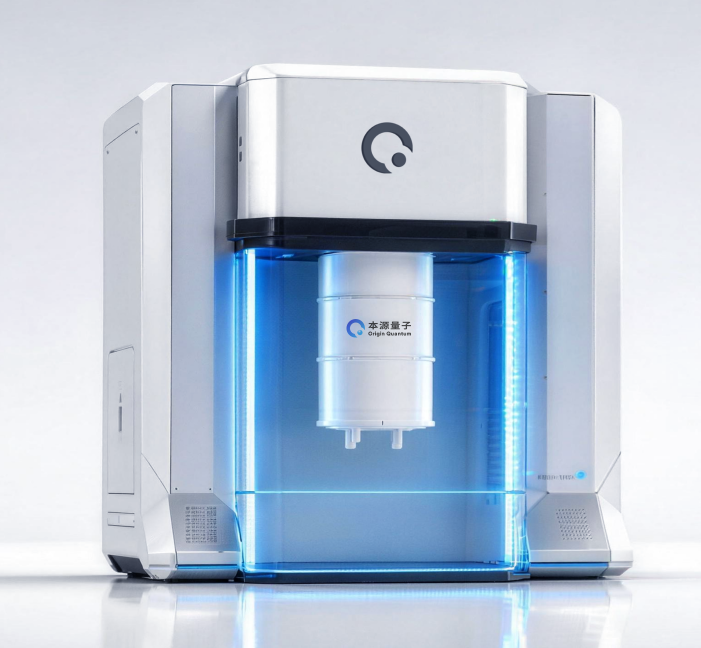
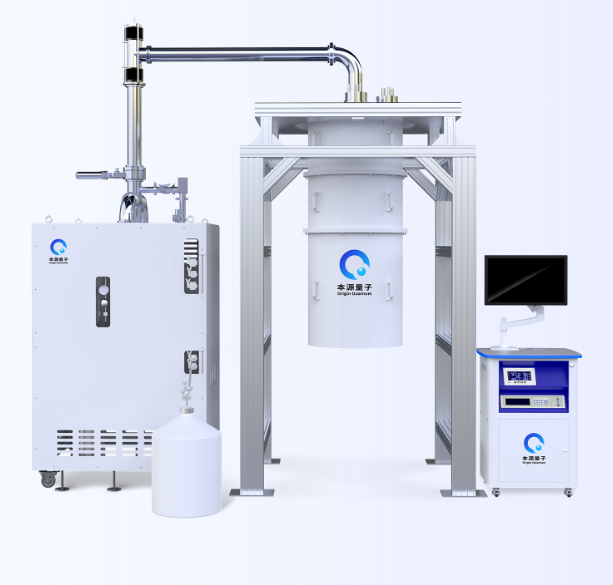
As of 2025, we're firmly in the NISQ era—Noisy Intermediate-Scale Quantum. This means today's quantum machines have 50–1,000+ qubits but are highly error-prone and require extreme cooling (near absolute zero!) to function.
Are quantum computers available today? Yes—but with major caveats.You can already access real quantum hardware via the cloud:
- IBM Quantum Experience: Access to qubit systems
- Origin Quantum Cloud: Offers quantum computer from cloud
- Microsoft Azure Quantum: Integrates multiple hardware providers
- Google Quantum AI: Provides research access to its Sycamore processor
However, these aren't plug-and-play devices. You need expertise in quantum programming (using languages ( like Qiskit or QPanda ) and typically work on experiments or algorithm testing. Quantum computers are technically "available"now.
When Will Quantum Computers Be Available?
This depends on what you mean by "available"Let's break it down by use case:
| Use Case | Estimated Availability | Notes |
|---|---|---|
| Cloud-based R&D access | ✅ Now | Used by pharma, finance, and aerospace firms for experimentation |
| Commercial quantum advantage | 2026–2030 (optimistic) | Solving real-world problems faster/cheaper than classical supercomputers |
| On-premise enterprise systems | 2030+ | Requires stable, error-corrected hardware; likely very expensive |
| Integration into existing workflows | 2030s | Via hybrid classical-quantum systems (e.g., optimization APIs) |
The biggest hurdle? Error correction. Today's qubits are "noisy"—they lose coherence quickly. To run useful, large-scale algorithms, we need fault-tolerant quantum computers with millions of high-quality physical qubits backing a smaller number of logical (error-corrected) qubits. Most experts agree this is at least a decade away.
When Will Quantum Computers Be Mainstream or Affordable?
quantum computers will not like smartphones or laptops. They're not designed for browsing the web, streaming video, or running Word documents.Instead, think of them like supercomputers: powerful, specialized machines accessed remotely for specific tasks.
For example:
- A drug company uses a quantum computer to simulate a new molecule → faster drug discovery → you get life-saving medicine sooner.
- A logistics firm optimizes global shipping routes → lower costs → cheaper goods.
As for affordability:
- Cloud access: Already low-cost or free for small jobs.
You won't "buy"a quantum computer—but you'll start seeing their impact in industries like healthcare, finance, and materials science by the late 2020s to early 2030s.
Common Misconceptions About Quantum Computing Availability
Let's debunk a few myths:
-
"Quantum computers will replace classical computers."
❌ False. Classical computers will still handle 99% of everyday tasks. Quantum will complement them for niche problems. -
"If IBM has a 1,000-qubit chip, we're almost there!"
❌ Misleading. Qubit count isn't everything. Quality, connectivity, and error rates matter more. A 1,000-noisy-qubit machine is far less powerful than a hypothetical 100-error-corrected-qubit one.
Realistic Timeline: When Will Quantum Computers Be Available?
Based on consensus from leading researchers, here's a outlook:
- 2024–2026: Continued cloud access expansion; more companies experiment with quantum algorithms; incremental hardware improvements.
- 2027–2030: First demonstrations of quantum advantage in practical domains (e.g., battery material simulation, portfolio optimization).
- 2030–2035: Early commercial deployment in high-value sectors (pharma, chemicals, finance); hybrid quantum-classical systems become common in data centers.
- 2035+: Potential for fault-tolerant systems enabling broader applications—but still not "consumer"devices.
IBM's roadmap targets 100,000+ qubit systems by 2033, but even that assumes breakthroughs in error correction and control electronics.
Final Thoughts
So, when will quantum computers be available? The answer isn't a single date—it's a spectrum of accessibility depending on your role:
- Researchers & developers: Available now via cloud platforms.
- Enterprises: Limited commercial use by 2030.
- General public: Indirect benefits starting in the 2030s
Quantum computing isn't a sprint—it's a marathon with huge scientific and engineering hurdles. But the payoff could revolutionize fields from climate modeling to AI. Stay curious.Want to try it yourself? Visit Quantum Cloud—it's free for new user, educational, and gives you a real taste of the quantum future.
Contact Us
 (+86) 177 3001 9472
 market@originqc.com