What Is Quantum Mechanics? How It Powers Quantum Computing
If you’ve ever heard phrases like "quantum leap," "Schrödinger’s cat," or "spooky action at a distance," you’ve brushed up against quantum mechanics—one of the most fascinating and mind-bending branches of modern physics.
What Is Quantum Mechanics?
Quantum mechanics is the branch of physics that describes how the tiniest particles in the universe—like electrons, photons, and atoms—behave. Unlike the predictable world we see every day (governed by classical physics), the quantum world operates under radically different rules: particles can be in multiple places at once, act like both waves and particles, and influence each other instantly across vast distances.
In our everyday world (the "classical" world), things are predictable. If you throw a baseball, you can use Newton’s laws to predict exactly where it will land. But in the subatomic world, the rules of the game change entirely. Particles can be in two places at once, they can teleport through barriers, and they can be "entangled" across vast distances.
Why Classical Physics Fails at the Quantum Level
Before the 20th century, scientists believed Newton’s laws could explain everything—from falling apples to orbiting planets. But when researchers began studying light and atoms, they hit a wall.
For example:
- Hot metal glows in specific colors, not a smooth rainbow. Classical theory couldn’t explain why.
- Electrons in atoms don’t spiral into the nucleus (as they should, according to electromagnetism). Instead, they occupy fixed "energy levels."
These puzzles led physicists like Max Planck, Niels Bohr, Werner Heisenberg, and Erwin Schrödinger to develop quantum theory—a new framework that matched experimental data perfectly.
The Three Pillars of Quantum Mechanics
1. Wave-Particle Duality
In the classical world, something is either a solid object (a particle) or a ripple (a wave). In quantum mechanics, everything is both. An electron behaves like a little marble when it hits a detector, but it travels through space like a wave in a pond. This is best demonstrated by the famous Double Slit Experiment.
2. Superposition (The "Spinning Coin")
Think of a coin. In the classical world, it is either Heads or Tails. In the quantum world, a particle can be in a state of superposition, meaning it is effectively "Heads AND Tails" at the same time until someone looks at it. Only when we measure the particle does it "decide" which state to be in.
3. Entanglement ("Spooky Action at a Distance")
This is the one that bothered Einstein. When two particles become "entangled," they are linked forever, no matter how far apart they are. If you change the state of one particle in New York, its partner in Tokyo (or on Mars!) will react instantly.
Quantum Mechanics vs. Classical Physics: A Quick Comparison
| Feature | Classical Physics (Newton, Maxwell) | Quantum Mechanics |
|---|---|---|
| Scale | Everyday objects (apples, cars, planets) | Atoms, electrons, photons |
| Predictability | Deterministic (exact outcomes) | Probabilistic (likelihoods, not certainties) |
| Particle Behavior | Particles are particles | Wave-particle duality |
| Energy | Continuous | Quantized (discrete levels) |
| Observation | Doesn’t affect the system | Measurement changes the state |
Real-World Applications of Quantum Mechanics
You might think quantum mechanics is just theoretical—but it powers much of modern life:
- Transistors & Semiconductors: The foundation of all computers and smartphones relies on quantum behavior of electrons in silicon.
- Lasers: Used in barcode scanners, surgery, fiber optics—all based on stimulated emission, a quantum process.
- MRI Machines: Use quantum properties of atomic nuclei to image the human body.
- Atomic Clocks: Enable GPS satellites to keep ultra-precise time using electron transitions.
How Quantum Mechanics Powers Quantum Computing
Now, let’s connect the dots to one of today’s hottest topics: quantum computing.
What Is a Quantum Computer?
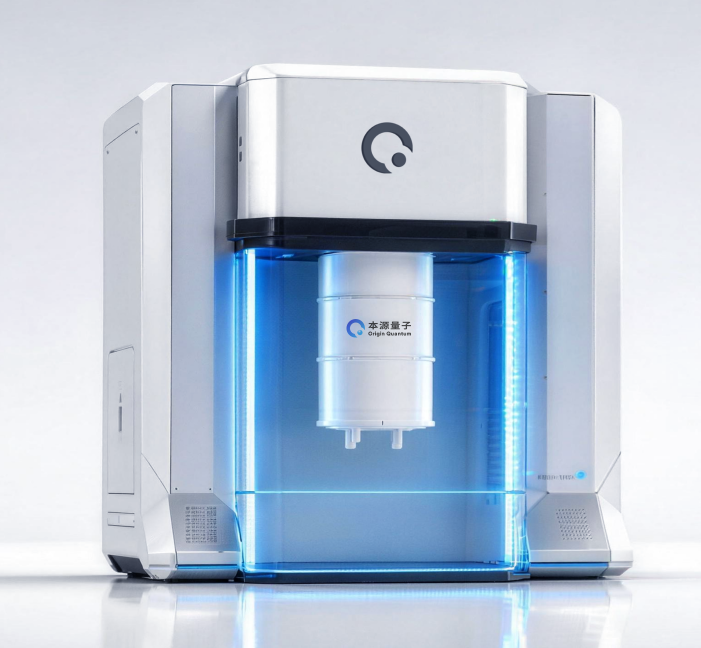
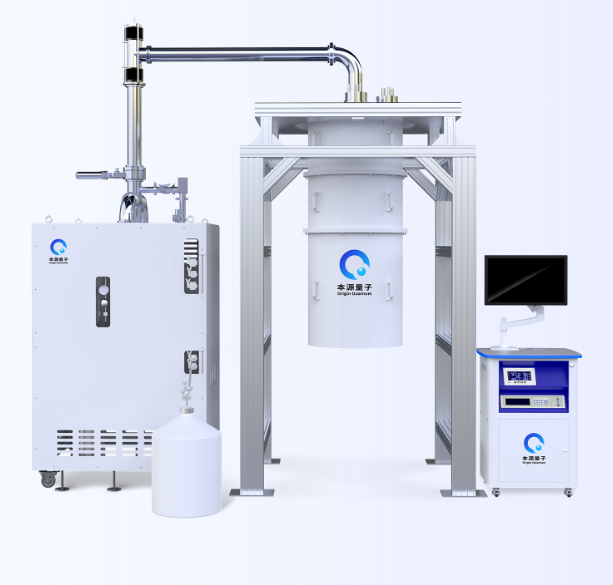
A quantum computer uses the principles of quantum mechanics—especially superposition and entanglement—to process information in ways impossible for classical computers.Instead of bits (0 or 1), it uses qubits (quantum bits), which can be 0, 1, or both at the same time.Why this matters: With just 50 qubits in superposition, a quantum computer can explore over 1 quadrillion (10¹⁵) possibilities simultaneously.
The Role of Quantum Mechanics in Quantum Computing
| Quantum Concept | Role in Quantum Computing |
|---|---|
| Superposition | Allows qubits to hold multiple states → massive parallelism |
| Entanglement | Links qubits so operations on one affect others → faster coordination |
| Quantum Interference | Amplifies correct answers and cancels wrong ones during computation |
Potential Uses of Quantum Computers
- Breaking current encryption (and creating unbreakable quantum encryption)
- Simulating complex molecules for drug discovery
- Optimizing logistics (e.g., delivery routes, financial portfolios)
- Accelerating AI training
Final Thoughts
So, what is quantum mechanics? It’s the operating system of reality at its smallest scales—a realm where certainty gives way to probability, and particles dance to a rhythm far stranger than fiction. While it defies everyday intuition, its predictions have been verified with astonishing precision for over a century.nd as we stand on the brink of the quantum computing era, the line between abstract theory and world-changing technology has never been thinner.
Contact Us
 (+86) 177 3001 9472
 market@originqc.com