Difference between classical and quantum computing - Explained Simply
Tech giants like Google, IBM, and Microsoft are racing to build the next generation of computers—and it's nothing like your laptop or smartphone. But what exactly sets quantum computing apart from the classical computing we use every day?
What Is Classical Computing?
Classical computing—the kind that powers your phone, laptop, and even NASA's mission control—is based on binary logic. At its core, every piece of data is represented as either a 0 or a 1, called a bit.Think of a bit like a light switch: it's either ON (1) or OFF (0). All software, from your favorite game to complex financial models, runs by flipping millions (or billions) of these switches in precise sequences.
Key Traits of Classical Computers:
- Use transistors to store and process bits.
- Follow deterministic logic: same input → same output, every time.
- Excel at sequential tasks: spreadsheets, word processing, web browsing.
- Scale linearly: adding more processors improves speed, but with diminishing returns for certain problems.
For decades, Moore's Law predicted that computing power would double roughly every two years. But we're now hitting physical limits—transistors can't shrink much further without quantum effects interfering. That's one reason researchers turned to… well, quantum physics.
Enter Quantum Computing: A Whole New Paradigm
Quantum computing doesn't just make computers faster—it rethinks how computation itself works. Instead of bits, it uses quantum bits, or qubits.
Here's where things get weird (in a good way).
The Magic of Qubits: Superposition & Entanglement
Unlike classical bits, qubits can be 0, 1, or both at the same time. This is called quantum superposition—a principle borrowed from quantum mechanics.
Analogy: Imagine a spinning coin. While it's in the air, it's neither purely"heads" nor"tails"—it's in a fuzzy state of both. Only when it lands (i.e., you measure it) does it settle into one state. That's superposition.Even more powerful is quantum entanglement: when two qubits become linked, the state of one instantly influences the other—no matter how far apart they are. Einstein famously called this"spooky action at a distance."These properties let quantum computers explore many possible solutions simultaneously.
Classical vs Quantum Computing: Side-by-Side Comparison
| Feature | Classical Computing | Quantum Computing |
|---|---|---|
| Basic Unit | Bit (0 or 1) | Qubit (0, 1, or superposition of both) |
| Processing Style | Sequential / deterministic | Probabilistic / parallel exploration |
| Information Scaling | n bits = n pieces of info | n qubits = 2n states simultaneously |
| Error Sensitivity | Low (error-corrected via redundancy) | Extremely high (decoherence, noise) |
| Current Use Cases | Everyday computing, databases, graphics | Optimization, molecular simulation, cryptography |
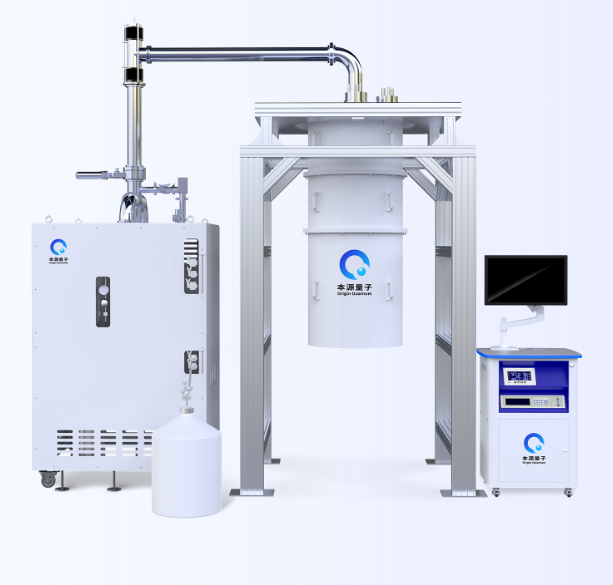
| Hardware Environment | Room temperature, standard chips | Near absolute zero (-273°C), isolated labs |
Why Can't Quantum Computers Replace Classical Ones?
Despite the hype, quantum computers aren't"better" at everything—they're different. In fact, for most daily tasks (email, video streaming, even basic math), your laptop will outperform any current quantum machine.
Quantum systems:
- Require extreme cooling (near 0 Kelvin).
- Are highly error-prone due to environmental interference (“decoherence").
- Only solve specific types of problems efficiently.
They shine in areas involving combinatorial complexity, such as:
- Simulating quantum chemistry (e.g., designing new batteries or medicines)
- Optimizing logistics (e.g., delivery routes for thousands of packages)
- Breaking certain encryption methods (like RSA)—though post-quantum cryptography is already being developed to counter this.
"Quantum won't replace classical—it will augment it." Future systems will likely use hybrid models: classical computers handling user interfaces and data prep, while quantum co-processors tackle specialized subroutines.
Understanding the difference between classical and quantum computing isn't about declaring a winner—it's about recognizing their unique strengths.
- Classical computing is reliable, versatile, and perfect for structured, everyday tasks.
- Quantum computing is experimental, fragile, but potentially transformative for specific scientific and industrial challenges.
As the field matures, expect to see quantum-classical hybrid systems powering breakthroughs in AI, materials science, and climate modeling.
Contact Us
 (+86) 177 3001 9472
 market@originqc.com