What Is Quantum Chip and How Does It Differ From Silicon Chip?
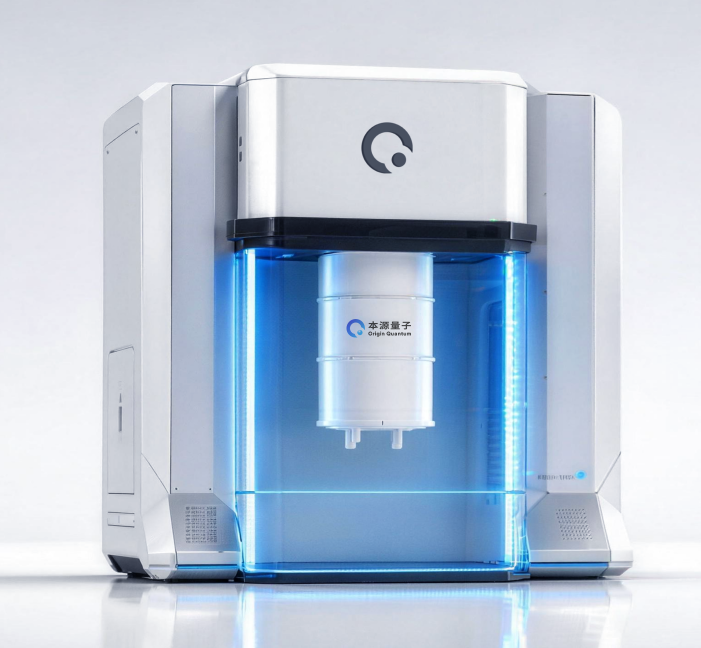
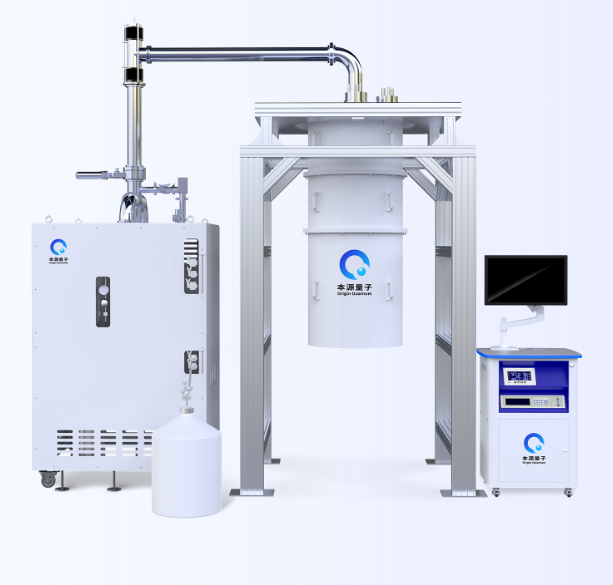
Inside a dilution refrigerator cooled to 15 millikelvin, a device smaller than a postage stamp on a copper stage. It looks unremarkable — a flat substrate patterned with thin metal lines and small loops. But this is a quantum chip, and it is currently one of the most difficult engineered objects on Earth to build.
A quantum chip is the physical processor that houses and controls qubits — the quantum mechanical equivalent of bits. Where a classical processor manipulates binary data through logic gates built from transistors, a quantum chip manipulates probability amplitudes through operations that exploit superposition, entanglement, and interference. The chip itself is not a "faster CPU." It is a fundamentally different kind of computing device, designed for a specific set of problems that are intractable for classical machines.
This article covers what a quantum chip actually is, how it works at the physical level, the competing architectures vying for dominance, and why manufacturing one remains an extraordinary engineering challenge.
How a Quantum Chip Works: The Physics on Silicon
Every quantum chip, regardless of its underlying technology, must solve three problems that classical chips never face:
- State initialization: The chip must reliably place each qubit into a known starting state, typically the ground state. Any residual thermal energy introduces errors before computation even begins.
- Coherent manipulation: The chip applies precisely timed control signals — microwave pulses, laser beams, or voltage gates — to rotate qubit states and create entanglement. These operations must complete before environmental noise destroys the quantum information, a window measured in microseconds for some architectures and seconds for others.
- Readout: At the end of a computation, the chip must measure each qubit and convert its quantum state into a classical bit that can be stored and analyzed. Measurement collapses the superposition, so this step is inherently destructive and must happen with high fidelity.
The difference between these requirements and classical chip design cannot be overstated. A classical transistor switches between 0 and 1 based on voltage thresholds that tolerate hundreds of millivolts of noise. A qubit's state is defined by a delicate phase relationship that can be disrupted by a single stray photon or a fraction of a degree of temperature drift. The control electronics, wiring, and packaging of a quantum chip are designed first and foremost to preserve that fragility.
Quantum Chip vs. Classical Chip: An Architectural Comparison
The gap between quantum and classical processors is not just a matter of clock speed or transistor count. The two architectures differ in almost every fundamental dimension:
| Dimension | Classical Chip | Quantum Chip |
|---|---|---|
| Basic unit | Bit (0 or 1) | Qubit (superposition of 0 and 1) |
| Processing model | Deterministic sequential logic | Probabilistic parallel computation via interference |
| Transistor / qubit count | Billions of transistors | Dozens to1000+ of qubits (as of 2026) |
| Operating temperature | Room temperature (with active cooling) | Millikelvin range or ultra-high vacuum |
| Error handling | Built-in error correction at the hardware level | Requires quantum error correction codes across many physical qubits |
| Programming model | Imperative code executed line by line | Quantum circuits composed of gates that manipulate probability amplitudes |
| Result type | Exact, deterministic output | Probabilistic distribution requiring multiple runs (shots) |
The qubit count difference is often misunderstood. A quantum chip with 100 qubits does not need billions of qubits to be useful. What matters is whether those qubits maintain sufficient coherence and gate fidelity to run algorithms that have no practical classical alternative. The threshold for this — often called "quantum advantage" — depends on the specific problem and the quality of the qubits, not just their quantity.
The Main Types of Quantum Chips
There is no single "correct" way to build a quantum chip. Multiple physical systems can serve as qubits, and each approach creates a different type of chip with distinct characteristics. The leading architectures are described below.
Superconducting Quantum Chips
These chips use superconducting circuits — typically aluminum or niobium structures patterned on silicon or sapphire substrates — to create artificial atoms. The most common qubit design, the transmon, encodes information in the energy levels of a superconductor-insulator-superconductor junction.
Superconducting chips are fabricated using techniques borrowed from the semiconductor industry, which gives them a scaling advantage. They operate at microwave frequencies and can be controlled with electronic pulses delivered through coaxial wiring. The trade-off is that coherence times are relatively short — typically tens to hundreds of microseconds — and the chips must be cooled to approximately 15 millikelvin, colder than interstellar space.
Trapped-Ion Quantum Chips
Instead of a fabricated circuit, a trapped-ion system uses individual atoms — commonly ytterbium, calcium, or barium — suspended in an electromagnetic field within a vacuum chamber. Laser pulses manipulate the atoms' internal energy states to perform quantum operations.
The qubits in trapped-ion systems are naturally identical — every ytterbium-171 ion is exactly the same — which gives them excellent coherence times and gate fidelities. The challenge is scaling: adding more ions to a single trap increases control complexity, and connecting multiple traps requires moving ions physically or using photonic interconnects. The "chip" in this architecture is more accurately described as the electrode structure and optical delivery system that holds and addresses the ions.
Photonic Quantum Chips
Photonic chips encode qubits in properties of individual photons — their polarization, time-bin, or path. These chips use integrated optical circuits with waveguides, beam splitters, and single-photon detectors fabricated on silicon or lithium niobate platforms.
The advantage of photonic qubits is that they operate at room temperature and are naturally suited for quantum communication. The disadvantage is that photons do not interact easily with each other, which makes two-qubit gates — a requirement for universal quantum computation — technically challenging to implement with high fidelity.
Neutral Atom Quantum Chips
Neutral atom systems trap uncharged atoms — typically rubidium or cesium — in arrays of optical tweezers created by focused laser beams. The atoms are held in a vacuum chamber and manipulated with lasers that excite them to Rydberg states, where strong interactions enable quantum gate operations.
This architecture offers a compelling combination: long coherence times (because the atoms are neutral and weakly coupled to the environment), high connectivity (because Rydberg interactions can span multiple atoms), and flexible reconfiguration (because the tweezer array can be rearranged). The technology is younger than superconducting and trapped-ion approaches but has advanced rapidly in recent years.
Why Quantum Chips Are So Hard to Manufacture
Designing a quantum chip is one thing. Fabricating it reliably at any scale is another problem entirely. The manufacturing challenges fall into several categories:
- Material purity: Defects in the substrate or at interfaces can trap charges that create fluctuating electric fields. These fields shift qubit frequencies and cause decoherence. For superconducting chips, even a single layer of surface contamination can reduce coherence times by an order of magnitude.
- Fabrication precision: Qubit parameters — frequency, anharmonicity, coupling strength — depend on physical dimensions at the nanometer scale. Variations that are negligible in classical chip fabrication produce qubits with mismatched properties, making uniform control across a multi-qubit chip extremely difficult.
- Wiring and packaging: A quantum chip must receive control signals and return readout data without introducing thermal noise or electromagnetic interference. In superconducting systems, this means routing hundreds of coaxial lines through multiple temperature stages of a dilution refrigerator, each stage adding complexity and potential heat load.
- Testing and calibration: Unlike classical chips, which can be tested with well-established automated procedures, quantum chips require extensive characterization — measuring coherence times, gate fidelities, crosstalk, and readout accuracy for every qubit. This process is slow and sensitive to environmental conditions.
- Yield: Even with careful fabrication, not every qubit on a chip will perform adequately. Classical chips can disable defective transistors with minimal impact. On a quantum chip, a single poorly performing qubit can degrade the performance of algorithms that require entanglement across the full register.
These challenges explain why, despite decades of investment, the largest quantum chips still contain only a few hundred qubits — and why most of those qubits are dedicated to error correction rather than raw computational power.
What Quantum Chips Can and Cannot Do Today
It is important to be clear about the current state of quantum chip capabilities. What these chips can do is demonstrate specific computational tasks — such as random circuit sampling or simulating small quantum systems — that are difficult for classical machines to replicate efficiently.
The gap between demonstration and utility is narrowing, but it remains significant. Quantum error correction, which is essential for running deep algorithms reliably, requires many physical qubits to encode a single logical qubit. Current chips are only beginning to reach the scale where small logical qubits can be demonstrated with a net improvement in lifetime over the underlying physical qubits.
For practical applications, most experts expect that useful quantum computation will arrive incrementally: first for specialized simulation tasks in chemistry and materials science, then for narrow optimization problems, and eventually — if fault-tolerant scaling succeeds — for broader applications including cryptography.
Frequently Asked Questions
What is a quantum chip used for?
Quantum chips target problems where classical computation hits a practical wall. Molecular simulation for drug discovery and materials science is the most active area — modeling electron interactions in a caffeine molecule, for example, requires tracking quantum states that would need more classical bits than there are atoms on Earth. Other applications include combinatorial optimization (routing, scheduling, portfolio selection) and cryptographic research. They are not used for, and are not suited to, general-purpose computing tasks.
How many qubits does a quantum chip have?
As of 2026, the largest quantum chips range from roughly 50 to over 1,000 physical qubits, depending on architecture. Superconducting chips currently lead in raw qubit count. Trapped-ion and neutral atom systems typically operate with fewer qubits but with higher per-qubit fidelity. The more important metric is logical qubits — error-corrected qubits constructed from many physical ones — and current chips are only beginning to demonstrate small numbers of these with a net lifetime advantage.
How do you access a quantum chip?
Most researchers and developers access quantum hardware through cloud platforms run by large technology companies and academic institutions. These platforms provide software development kits — typically Python-based — that allow users to define quantum circuits and submit jobs to real chips remotely. Physical access to the hardware itself is limited to the organizations that build and operate these systems. Cloud access is priced per execution ("shot") or through monthly subscriptions starting at a few hundred dollars.
How much does a quantum chip cost?
There is no retail price for a quantum chip. The complete system — dilution refrigerator or vacuum chamber, control electronics, shielding, and the fabrication infrastructure required to produce the chip — runs into tens of millions of dollars. This is why cloud access has become the dominant model for anyone outside well-funded research organizations who needs to run experiments on real quantum hardware.
Can a quantum chip replace a classical CPU?
No. A quantum chip is a co-processor, not a standalone computer. Every quantum system relies on classical chips for pulse generation, calibration, data storage, error decoding, and result analysis. The relationship is analogous to how a GPU assists a CPU: each handles the class of problems it is designed for, and they work together rather than competing.
Contact Us
 (+86) 177 3001 9472
 market@originqc.com