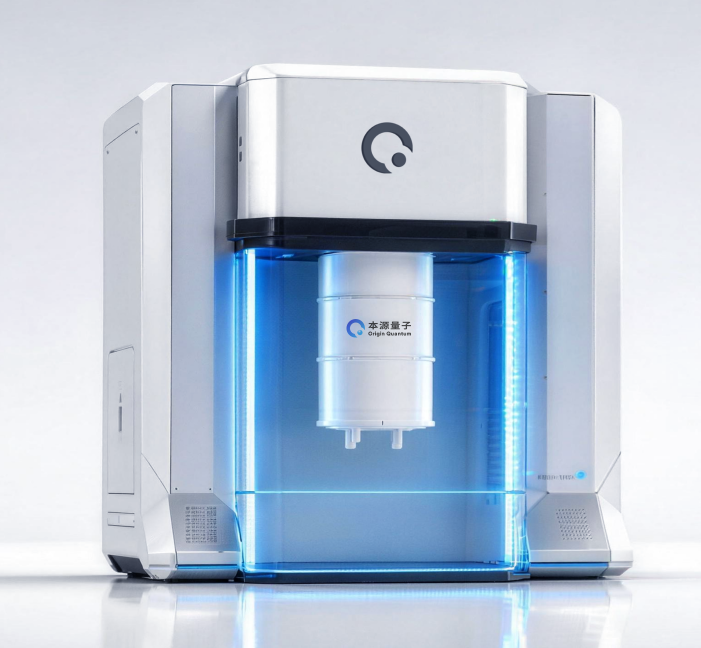
Components of Quantum Computer: Why Your Laptop Can't Do This
Quick Takeaway: A quantum computer replaces classical transistors with qubits, requiring a tightly integrated hardware-software architecture. Its core components include a quantum processor, sub-kelvin dilution refrigerator, RF/microwave control electronics, multi-layer shielding, and a dedicated quantum software stack to maintain coherence and execute quantum algorithms.
If you've ever looked inside a data center, you know what a server rack looks like. Now imagine a machine that needs to be colder than deep space just to stay online. That's a quantum computer—and the difference from classical hardware starts with its physical components. This guide walks through each component of a quantum computer, what it does, and why engineers go to such extremes to keep qubits stable.
Why Classical Computer Parts Don't Work for Quantum
A classical processor is essentially a dense array of transistors—tiny switches toggling between 0 and 1. You can pack billions of them onto a chip, run them at room temperature, and they work reliably for years. Qubits don't behave that way.
Qubits rely on fragile quantum states. A slight temperature change, a stray electromagnetic field, even a cosmic ray hitting the chip—any of these can collapse the quantum state and wipe out the computation. This is called decoherence, and it's the main reason quantum hardware looks so different from classical hardware. Every component of a quantum computer exists to solve one problem: keep qubits stable long enough to do useful work.
Core Components of a Quantum Computer—Overview
| Component | What It Does | Why It Matters |
|---|---|---|
| Qubits (Physical) | Store and process quantum information | The actual computational unit—everything else supports these |
| Quantum Processor / Chip | Physically arranges qubits and routes control signals | Determines qubit connectivity, gate fidelity, and scaling path |
| Control Electronics | Generates precise pulses (microwave, laser, or RF) to manipulate qubits | Bad control = bad results, regardless of qubit quality |
| Cryogenic Cooling System | Maintains operating temperature near absolute zero | Without it, most qubit types decohere in microseconds |
| Shielding and Isolation | Blocks electromagnetic interference, vibrations, and air molecules | Extends coherence time by reducing environmental noise |
| Quantum Software Stack | Compiles algorithms into gate sequences, manages error correction | Hardware is useless without software that can actually run circuits on it |
Each of these is a serious engineering challenge on its own. Below is a closer look at how they actually work.
1. Qubits – The Actual Computing Unit
Everything in a quantum computer revolves around qubits. But "qubit" isn't a single type of device—it's a role that different physical systems can fill. The choice of qubit type shapes every other design decision in the machine.
Here are the main approaches being used today:
| Qubit Type | Physical Basis | Coherence Time |
|---|---|---|
| Superconducting | Josephson junctions on a chip | ~50–300 μs |
| Trapped Ion | Individual ions held in electromagnetic traps | Seconds to minutes |
| Photonic | Single photons routed through optical circuits | N/A (room temp operation) |
| Neutral Atom | Atoms trapped in optical tweezers (focused laser beams) | Seconds range |
| Silicon Spin | Electron spin states in silicon quantum dots | Milliseconds to seconds |
There's no consensus winner yet. Each approach has different implications for the other components listed below. If you're comparing quantum systems, the qubit type is the first thing to look at—because it determines what kind of cooling, control, and shielding the machine needs.
2. Quantum Processor – Where Qubits Live
The quantum processor (sometimes called the quantum chip) is the physical substrate that holds the qubits and the wiring needed to address them individually. For superconducting systems, this looks somewhat like a classical CPU—but the similarities end there.
A few things that make quantum chip design difficult:
- Connectivity: Not every qubit can talk to every other qubit directly. The chip layout determines which qubits can interact, which constrains what algorithms can run efficiently.
- Crosstalk: When you pulse one qubit, neighboring qubits can pick up some of that signal. Good chip design minimizes this, but it's a constant engineering battle.
- Material purity: Even microscopic defects in the substrate can trap charges and introduce noise. That's why you'll see papers about "surface treatment" and "dielectric loss" in quantum hardware research—it directly affects qubit performance.
As of early 2026, the largest publicly announced superconducting quantum processors are in the 1,000+ qubit range, though qubit count alone doesn't determine computational capability. Gate fidelity, coherence time, and connectivity matter just as much—sometimes more.
3. Control Electronics – Driving the Qubits
Qubits don't operate on their own. They need precisely timed signals to perform gate operations, initialize states, and read out results. The control electronics generate those signals.
For superconducting qubits, control electronics produce microwave pulses in the 4–8 GHz range. For trapped ions, they drive lasers at specific wavelengths. For spin qubits, they generate high-frequency microwave and RF signals. In each case, timing needs to be accurate to within nanoseconds, and amplitude needs tight control—because a pulse that's slightly too strong or too weak produces the wrong gate operation.
The control stack typically includes:
- Arbitrary waveform generators (AWGs) – shape the pulses
- Local oscillators – provide the carrier frequency
- Digital-to-analog and analog-to-digital converters – translate between digital control software and analog physical signals
- Amplifiers and attenuators – adjust signal strength at different stages
- FPGA-based real-time processing – for fast feedback and active reset operations
One practical issue here is the wiring bottleneck. Each qubit needs multiple control lines. At room temperature, that's manageable. But inside a cryogenic system, every wire carries heat from the warmer stages down to the cold stage. As qubit counts grow, finding ways to multiplex control signals or move some electronics closer to the chip (cryo-CMOS) becomes critical. This is an active area of development across the industry.
4. Cryogenic System – The Dilution Refrigerator
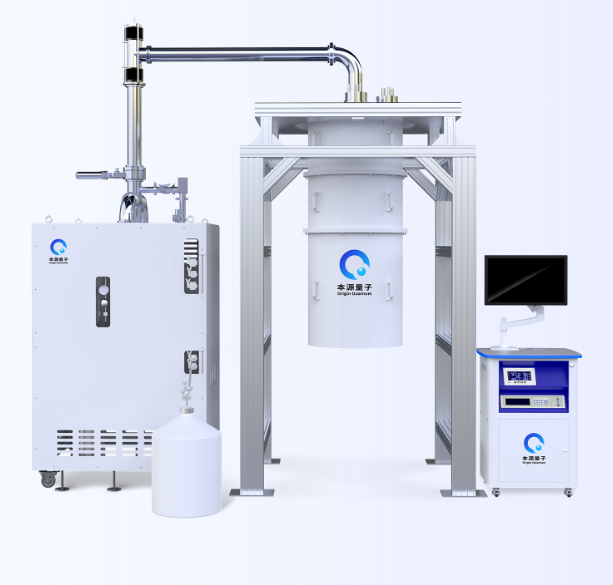
If you've seen photos of a quantum computer, you've probably seen the dilution refrigerator—that distinctive copper-and-steel cylinder hanging from a support frame. It's the most visually striking part of the setup, and it serves a straightforward purpose: get the quantum chip cold enough that thermal noise doesn't destroy quantum states.
For superconducting qubits, the target temperature is around 10–15 millikelvin. To put that in perspective, the cosmic microwave background radiation in deep space is about 2.7 Kelvin—roughly 200 times warmer. The mixing chamber at the bottom of the fridge is one of the coldest places humans can create consistently.
A typical dilution refrigerator has multiple temperature stages:
| Stage | Temperature | Purpose |
|---|---|---|
| 50 K plate | ~50 K | First thermal anchoring, radiation shielding |
| 4 K plate | ~4 K | House cryogenic amplifiers, further thermal filtering |
| Still | ~0.7–1 K | Pressure-driven cooling stage using helium-3/helium-4 mixture |
| Mixing chamber | ~0.01–0.02 K | Mounts the quantum chip—the coldest operational point |
The refrigeration process uses a mixture of helium-3 and helium-4 isotopes. The physics is specific—when these isotopes mix at certain ratios, the process absorbs heat, providing continuous cooling. It's not a one-time cooldown; the system runs continuously during operation.
Not all quantum computers need this level of cooling. Photonic systems can operate at room temperature. Some neutral atom and trapped ion systems operate at higher temperatures (though still often cryogenic). But for superconducting qubits—the approach with the most commercial systems deployed—the dilution refrigerator is non-negotiable.
5. Shielding and Isolation
Cold isn't enough. Qubits are sensitive to electromagnetic interference across a wide frequency range. A nearby cell phone transmitting, a fluorescent light flickering, or even the control electronics themselves can introduce noise that degrades qubit performance.
Shielding works at multiple levels:
- Magnetic shielding: Mu-metal enclosures or superconducting shields (which expel magnetic fields via the Meissner effect) reduce ambient magnetic field fluctuations. This is especially important for spin qubits and some superconducting designs.
- RF/EMI shielding: The refrigerator itself acts as a Faraday cage, and additional filtering is applied to all wiring entering the cold stages. Low-pass filters on control lines prevent high-frequency noise from reaching the qubits.
- Vibration isolation: Mechanical vibrations can modulate qubit frequencies. Systems are typically mounted on optical tables or active vibration dampening platforms.
- Vacuum environment: The inner stages of the refrigerator operate under high vacuum to eliminate gas molecules that could carry heat or interfere with qubit operation.
The shielding requirements mean that quantum computers aren't just "plug into a wall and run" machines. They need a controlled environment—typically a dedicated lab space with careful attention to electromagnetic cleanliness. This is a practical consideration for anyone planning to install on-premises quantum hardware.
6. Quantum Software Stack
The hardware components above get you a machine that can hold quantum states and manipulate them. The software stack is what turns that into something that can solve problems.
A typical quantum software stack has several layers:
- Programming frameworks: Libraries like Qiskit (IBM), Cirq (Google), Q# (Microsoft), and QPanda let developers write quantum circuits in familiar languages (Python, C++, etc.).
- Compilers and optimizers: These translate high-level circuit descriptions into the specific gate set of the target hardware, then optimize for depth, fidelity, and connectivity constraints. This step matters—a poorly compiled circuit can lose all quantum advantage before it even runs.
- Error mitigation and correction: Current quantum computers are noisy (the "NISQ" era—Noisy Intermediate-Scale Quantum). Error mitigation techniques like zero-noise extrapolation and probabilistic error cancellation help improve result quality without full error correction. True fault-tolerant quantum computing will require quantum error correction codes like surface codes, which need many physical qubits per logical qubit.
- Classical-quantum integration: Most practical quantum workflows are hybrid. A classical computer prepares inputs, submits circuits to the quantum processor, collects results, and iterates. The orchestration of this loop—especially for variational algorithms like VQE or QAOA—is a software challenge, not just a hardware one.
The software side moves fast. Gate sets, optimization passes, and error mitigation techniques that were state-of-the-art two years ago may already be outdated. If you're building on quantum hardware, staying current with the software stack is as important as understanding the hardware specs.
How the Components of a Quantum Computer Work Together
It might be helpful to think about the signal path from a user's perspective:
- A developer writes a quantum circuit in software and submits it through an API.
- The compiler translates the circuit into hardware-native gates and schedules the pulse sequences.
- Control electronics generate the precise microwave, laser, or RF signals.
- Those signals travel down through the cryogenic stages, each stage thermally anchored to prevent heat from reaching the chip.
- The qubits on the processor chip respond to the signals, executing the quantum operations.
- Shielding keeps external noise from corrupting the computation during execution.
- Readout electronics measure the final qubit states and send the results back up to the classical control system.
- Software processes the measurement results and returns them to the user.
Each step introduces potential sources of error. The components listed above aren't just parts sitting next to each other—they form a tightly coupled system where changes in one area ripple through the others. That's why improving a quantum computer is rarely about upgrading one component; it usually requires coordinated advances across several of them simultaneously.
Frequently Asked Questions
Can quantum computers run at room temperature?
Some can. Photonic quantum computers operate at room temperature because photons don't require cryogenic conditions to maintain quantum states. Some trapped ion and neutral atom systems also operate at higher temperatures than superconducting systems. However, the majority of commercially deployed quantum computers today use superconducting qubits, which need millikelvin temperatures. Room-temperature quantum computing is an active research goal, but it hasn't reached commercial maturity yet.
Why do quantum computers need such extreme cooling?
Thermal energy causes random quantum state transitions—a phenomenon called decoherence. At room temperature, the thermal energy (about 26 meV) is far larger than the energy spacing between qubit states (typically in the μeV range for superconducting qubits). Cooling to millikelvin temperatures reduces thermal energy enough that qubit states remain stable for the duration of a computation. Without this cooling, superconducting qubits would decohere in nanoseconds instead of microseconds.
What's the most expensive component of a quantum computer?
For superconducting systems, the dilution refrigerator is typically the single most expensive hardware component—often costing several hundred thousand to over a million dollars, depending on size and specifications. The control electronics stack (especially for systems with hundreds of qubits) can also be a significant cost driver. However, the total cost of ownership includes facility requirements (shielded space, stable power, cooling for the fridge itself), which can rival or exceed the hardware costs.
For more details on specific quantum systems and available platforms, you can explore our quantum computing hardware overview.
Contact Us
 (+86) 177 3001 9472
 market@originqc.com