Quantum Computing Definition:A 2026 Perspective (It's Not Just Faster)
In 2026, the term "quantum computing" is ubiquitous. It is often thrown around in boardrooms and tech conferences as the inevitable successor to silicon. However, most standard definitions stop at "it's faster." This is not only an oversimplification; it is technically misleading.
To truly understand the quantum computing definition, we must look beyond the speed and examine the fundamental nature of information processing. It is not just a faster engine; it is a different mode of transportation entirely.
This article explores quantum computing through three novel lenses: Information Geometry, Simulation Theory, and the shift to Quantum Utility.
1. The Geometric Definition: Navigating High-Dimensional Space
Traditional computing is linear. It processes information in a straight line of binary states. A more rigorous definition of quantum computing involves geometry.
Imagine you are trying to find the lowest point in a vast, mountainous landscape (an optimization problem). A classical computer is like a hiker: it has to walk down one path, realize it's a dead end, climb back up, and try another. It explores the landscape sequentially.
A quantum computer, leveraging superposition, acts differently. It is like water flooding the landscape simultaneously. It explores the entire terrain at once to find the lowest valley (the optimal solution) immediately.
The Math Behind the Magic
Mathematically, we describe a qubit's state not just as 0 or 1, but as a vector in a two-dimensional complex vector space. This is often visualized using the Bloch Sphere.
While a classical bit is stuck at the North Pole (0) or South Pole (1) of this sphere, a qubit can exist anywhere on the surface. This continuous range of possibilities allows quantum algorithms to manipulate probability amplitudes—constructive interference amplifies the correct answer, while destructive interference cancels out the wrong ones.
2. The "Simulation" Definition: Feynman's Original Vision
Why was quantum computing invented? It wasn't just to break encryption. It was born out of necessity in physics.
In the early 1980s, Nobel laureate Richard Feynman observed that classical computers were failing at simulating nature. Nature is quantum. Trying to simulate a quantum system (like a complex molecule) on a classical computer requires an exponential amount of memory.
- The Classical Limit: To perfectly simulate just 40 electrons in specific positions, a classical supercomputer would need over 130 GB of memory just to store the state. Add one more electron, and you double the requirement.
- The Quantum Advantage: Feynman famously noted, "Nature isn't classical, dammit, and if you want to make a simulation of nature, you'd better make it quantum mechanical."
Therefore, a precise definition of quantum computing is: A programmable device that uses quantum mechanical phenomena to simulate systems that are intractable for classical machines.
3. The Era of "Quantum Utility" (2026 Perspective)
For years, the industry chased "Quantum Supremacy"—doing a calculation a classical computer couldn't do. But that calculation didn't have to be useful.
In the current landscape (2026), the definition has shifted toward Quantum Utility. This is the threshold where a quantum computer performs a task that is not only impossible for a classical computer but also has practical, commercial value.
We are moving from "science experiments" to "industrial tools." This means focusing on:
- Error Mitigation: Instead of waiting for perfect error correction (which requires millions of qubits), we use clever software to reduce noise in today's smaller systems.
- Hybrid Architectures: The quantum computer is not the whole computer. It acts as an accelerator (like a GPU) for specific, heavy-lifting tasks, while the CPU handles the rest.
Comparative Analysis: The Evolution of Compute
To visualize where quantum computing fits in the technological timeline, consider this comparison:
| Feature | Classical (CPU) | AI Accelerator (GPU/TPU) | Quantum Processor (QPU) |
|---|---|---|---|
| Core Logic | Boolean Logic (AND, OR, NOT) | Matrix Multiplication | Quantum Interference & Entanglement |
| Data Structure | Deterministic Bits | Floating Point Numbers | Probability Amplitudes |
| Best Application | General Purpose, Logic, Control | Machine Learning, Graphics | Combinatorial Optimization, Chemistry |
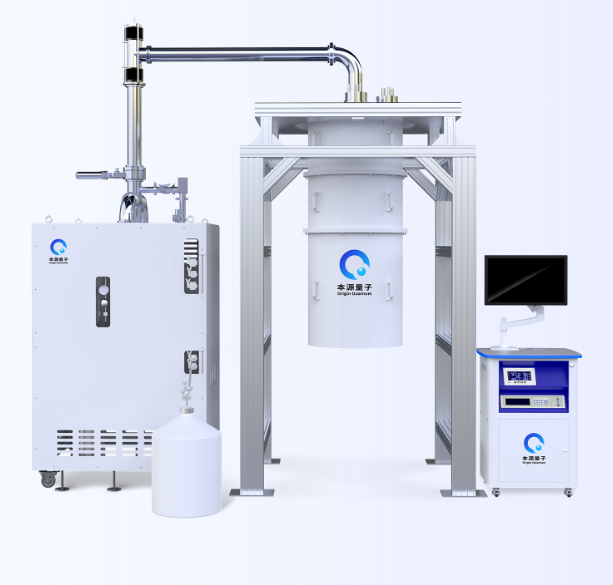
| Operating Temp | Room Temperature | Room Temperature (mostly) | Near Absolute Zero (mK range) |
The Technical Barrier: Decoherence
No definition of quantum computing is complete without addressing its Achilles' heel: Decoherence.
Because qubits rely on delicate superpositions, any interaction with the outside world—heat, vibration, electromagnetic waves—causes the quantum state to "collapse" into a classical state. This introduces errors.
Current research in 2026 focuses heavily on Topological Qubits and Surface Code error correction. These methods aim to spread quantum information across many physical qubits to create a single, robust "logical qubit" that can withstand noise.
Conclusion
The quantum computing definition is no longer just about "potential." It is a rigorous engineering discipline focused on harnessing the geometry of high-dimensional Hilbert spaces to solve specific, high-value problems.It is not a replacement for your laptop. It is a specialized instrument—a "telescope for the microcosm"—that allows us to peer into the fundamental structure of matter and optimization in ways previously impossible.
Contact Us
 (+86) 177 3001 9472
 market@originqc.com