How Quantum Computing Will Change the Future: A Realistic Look at What's Coming
How will quantum computing actually change the future? Not the science-fiction version, but the practical, grounded take on what's realistic, what's overblown, and where the real impact is likely to hit first.
Quantum Computing Won't Replace Your Computer, But It Will Change Industries
Here's what most articles skip: quantum computers aren't faster versions of classical computers. They're different. A classical computer processes bits — ones and zeros. A quantum computer uses qubits, which can exist in multiple states at once thanks to superposition. Combine that with entanglement (where qubits influence each other even when separated), and you get a machine that's exceptionally good at certain types of problems: optimization, simulation, and some forms of pattern recognition.
The problem is that most people hear "quantum" and think "everything will be faster." That's not how it works. Your laptop isn't going anywhere. But the industries that rely on massive computation — pharma, finance, logistics, materials science — those are the ones that will feel the shift first.
How Quantum Computing Will Change the Future Across Key Industries
Drug Discovery and Healthcare: Where the Impact Might Come First
The reason is straightforward: simulating molecular behavior is computationally brutal on classical systems. The number of possible interactions between atoms grows exponentially, and even the best supercomputers hit a wall pretty quickly.
Quantum computers don't have that same wall — at least not in theory. In practice, we're still early. But here's what's happening right now:
- Protein folding simulations: Companies like Roche have been experimenting with quantum approaches for modeling protein structures. It's not replacing wet-lab work, but it's narrowing down which molecules are worth testing physically. That alone could shave months off early-stage R&D.
- Material discovery for batteries: There's a lot of interest in using quantum simulation to find better electrolytes and cathode materials. If you've wondered why EV battery improvements have been incremental rather than revolutionary, computational limits are part of the reason. Quantum might change that equation.
- Personalized treatment modeling: This one is further out, but the idea is that quantum algorithms could process genomic data in ways that make individualized treatment plans more practical. It's speculative today, but the math checks out.
Finance: Optimization and Risk Modeling
Wall Street has been throwing money at quantum computing for years. JPMorgan Chase, Goldman Sachs, Barclays — they all have quantum research teams or partnerships. The question is whether it'll actually change anything for the average person.
| Application | Where Quantum Helps | Limitations |
|---|---|---|
| Portfolio optimization | Can evaluate far more asset combinations simultaneously | Still needs clean, structured data — garbage in, garbage out |
| Risk modeling | Better Monte Carlo simulations with fewer computational constraints | Market behavior isn't purely mathematical; human panic doesn't follow equations |
| Fraud detection | Pattern recognition on massive transaction datasets | Classical ML already does this reasonably well; quantum advantage here is marginal |
The honest take: quantum computing in finance will likely create incremental advantages for the firms that adopt it first, but it won't prevent the next financial crisis. Markets are too driven by psychology for any algorithm — quantum or otherwise — to fully predict.
Cybersecurity: The Threat Everyone's Preparing For
This is the part of quantum computing's future that keeps security professionals up at night. Shor's algorithm — a method for factoring large numbers efficiently on a quantum computer — theoretically breaks RSA encryption, which secures most of the internet today.
But here's the thing that often gets left out: we're not there yet. Breaking RSA-2048 would require millions of stable qubits. Current systems are in the hundreds to low thousands, and they're noisy (hence the term NISQ — Noisy Intermediate-Scale Quantum).
- Post-quantum cryptography migration: NIST has already standardized new encryption algorithms designed to resist quantum attacks. The migration is slow — you don't just flip a switch on global infrastructure — but it's happening.
- "Harvest now, decrypt later" concerns: Some intelligence agencies are allegedly collecting encrypted data now, betting they can decrypt it once quantum computers are powerful enough. If you're handling long-lived sensitive data (state secrets, medical records, industrial IP), this is worth taking seriously.
- Quantum Key Distribution (QKD): This uses quantum physics itself to secure communication. It's been demonstrated over fiber networks and even via satellite. But scaling it globally is an infrastructure challenge, not just a technology one.
Climate and Energy
Yes, quantum simulation could help design better catalysts for carbon capture or more efficient solar cell materials.
Where I do see potential:
- Grid optimization: Balancing energy supply and demand across a national grid is a massive optimization problem. Quantum algorithms could theoretically handle this more efficiently, especially as renewable sources (which are intermittent) become a larger share of the mix.
- Materials for energy storage: Better batteries, better supercapacitors, better hydrogen storage — all of these depend on understanding materials at the quantum level. Ironically, quantum computers might be the right tool for simulating quantum-scale chemistry.
Quantum computing might make some of the technology easier.
The Challenges That Will Slow Things Down
- Qubit quality matters more than quantity: Everyone talks about qubit counts, but error rates are the real bottleneck. A quantum computer with 1,000 noisy qubits isn't necessarily better than one with 100 stable ones. Error correction is the unsolved problem that everyone in the field acknowledges but nobody has cracked at scale.
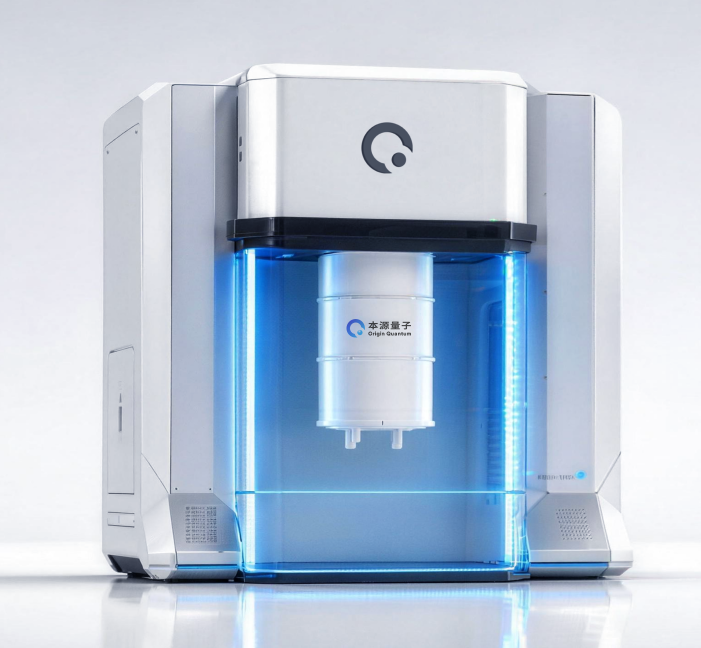
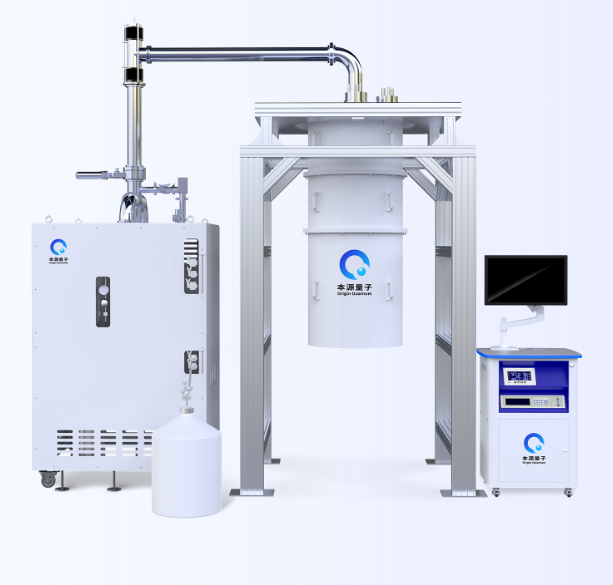
- Cooling requirements: Most quantum processors need to operate near absolute zero. That's fine for a lab, but it limits where and how these machines can be deployed. Some companies are working on room-temperature approaches, but they're not competitive yet.
- Talent bottleneck: There simply aren't enough people who understand both quantum physics and practical software engineering. The skill gap is real, and it's slowing progress more than most people realize.
If you're wondering when quantum computing will affect your life directly, my honest answer is: probably not for another decade, at least in a way you'd notice. The indirect effects — better drugs, better materials, better financial models — those will trickle down over time.
A Realistic Timeline for How Quantum Computing Will Change the Future
Based on where things stand today, here's best guess at how this plays out:
| Timeframe | What to Expect |
|---|---|
| 2025–2027 | Continued research progress; more quantum cloud access; hybrid quantum-classical experiments in pharma and finance |
| 2028–2032 | First commercially meaningful quantum advantage in niche applications (drug discovery, optimization); post-quantum cryptography migration accelerates |
| 2033–2040 | Broader industry adoption; quantum computing becomes a standard tool for R&D in materials, chemistry, and logistics |
| 2040+ | Mature fault-tolerant systems possible; broader societal impact depends on whether the technology scales and becomes accessible |
These are guesses, not predictions. The field could accelerate or stall — both are possible. What I'm confident about is that the companies and researchers investing now are positioning themselves for when (not if) the technology matures.
Contact Us
 (+86) 177 3001 9472
 market@originqc.com