What Is Quantum Supremacy? A Clear, In-Depth Guide for the Curious Mind
What Exactly Is Quantum Supremacy
On a morning in October 2019, a team at Google sat in a conference room watching a printout come off a lab machine. Their quantum processor, a chip called Sycamore, had just finished a calculation in 200 seconds. The math said the world's fastest supercomputer would need 10,000 years to do the same thing.
That moment is what people mean when they talk about quantum supremacy. The term sounds dramatic, and the reality is both more specific and more interesting than the headline suggests. Quantum supremacy is a narrow, technical milestone: a quantum computer completes a specific task faster than any classical supercomputer can simulate that same task.

How Google's Sycamore Did It
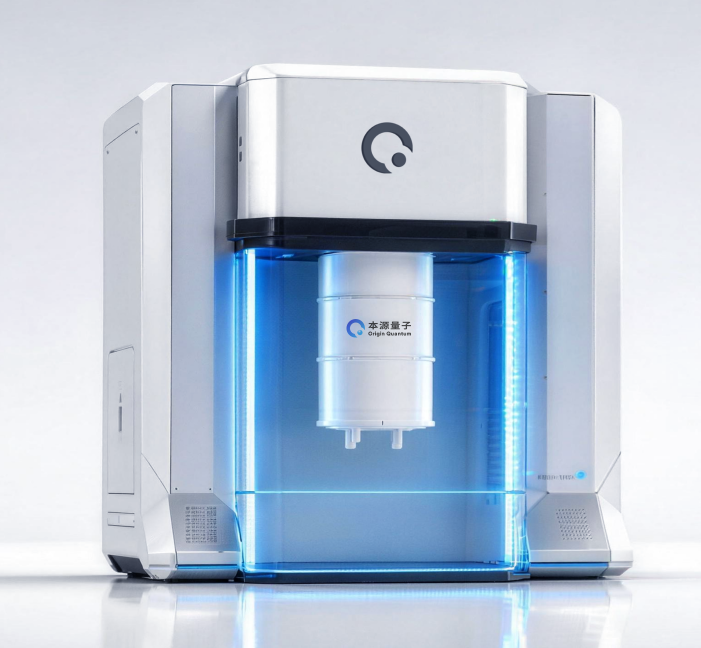
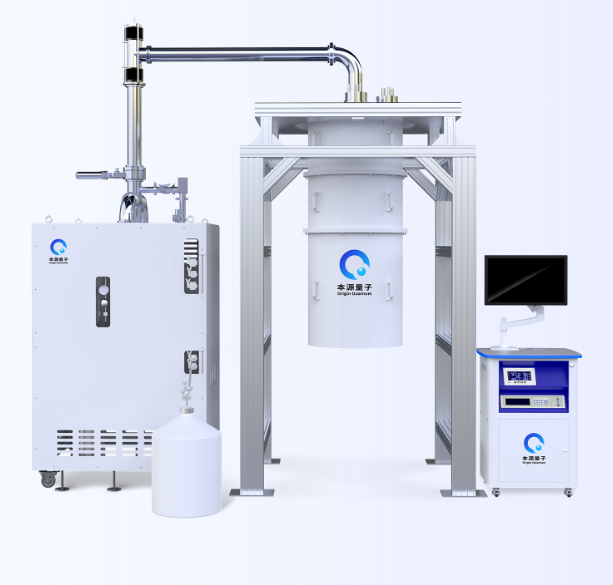
The experiment itself is worth understanding because it reveals both the achievement and its limitations. Sycamore was a 53-qubit processor—54 were fabricated, but one failed during testing, so they used 53. The chip sat inside a dilution refrigerator cooled to roughly 15 millikelvin, colder than deep space.
The processor itself was built on a two-dimensional grid of superconducting transmon qubits. Each qubit consists of a pair of Josephson junctions—non-linear inductors that create an anharmonic oscillator, allowing the system to isolate two energy levels as the computational |0⟩ and |1⟩ states. The qubits are patterned on a silicon substrate using aluminum thin-film deposition, and neighboring qubits are coupled through tunable couplers that can be turned on and off with microwave pulses.
The task was random circuit sampling. Here's what that means in plain terms: Google designed a quantum circuit—a sequence of quantum gates—that generates a probability distribution of outputs. The circuit consisted of alternating layers of single-qubit gates and two-qubit controlled-phase (CZ) gates, arranged in a pattern that maximizes entanglement across the chip. The specific gate sequence was chosen pseudo-randomly from a set of well-characterized operations, and the circuit had a depth of 20 cycles—meaning each qubit underwent roughly 20 gate operations before measurement.
Running the circuit produces bitstrings (sequences of 0s and 1s) with certain probabilities. The quantum processor samples from this distribution naturally, because that's what quantum systems do. A classical computer has to calculate those probabilities one by one, which becomes exponentially harder as you add qubits and circuit depth.
Sycamore ran the circuit about one million times in 200 seconds and collected samples. Google's analysis, published in Nature (Arute et al., 2019), estimated that Summit—the supercomputer ranked number one on the TOP500 list at the time—would take approximately 10,000 years to produce the same output. The paper reported a cross-entropy benchmarking fidelity of approximately 0.2%, meaning the output distribution was measurably correlated with the ideal quantum distribution despite noise. That 0.2% is enough to demonstrate the principle; a fault-tolerant machine would need fidelities above 99.9%.
| System | Time to Complete | Type |
|---|---|---|
| Google Sycamore (53 qubits) | ~200 seconds | Quantum processor |
| IBM Summit (original estimate) | ~10,000 years | Classical supercomputer |
| IBM Summit (optimized estimate, 2019) | ~2.5 days | Classical supercomputer |
Why the Math Works: Superposition, Entanglement, and Exponential Scaling
Classical bits are binary: 0 or 1. Qubits don't have that restriction. Through superposition, a qubit can exist in a combination of 0 and 1 states simultaneously, weighted by probability amplitudes. When you entangle multiple qubits, their states become correlated in ways classical physics can't replicate. The computational space grows as 2 to the power of n, where n is the number of qubits.
Fifty-three qubits means 2^53 basis states—roughly 9 quadrillion. The quantum processor doesn't "try all possibilities at once" in the cartoonish sense. Instead, quantum interference amplifies the probability amplitudes of correct answers while canceling out wrong ones. The measurement at the end collapses the system into a single output, but that output is statistically biased toward the right answer because of how the interference was engineered.
The critical detail that most explanations skip: this exponential scaling only helps for certain problem structures. Random circuit sampling was deliberately chosen because it's hard for classical machines and natural for quantum ones. It's not useful for anything except proving the point. That's intentional. The first flight at Kitty Hawk didn't carry passengers either.
"Supremacy" vs. "Advantage": The Terminology Debate
The word "supremacy" carries baggage. Several prominent researchers, including John Preskill (who originally coined the term in 2012), have acknowledged that the political overtones make some uncomfortable. The field has gradually shifted toward "quantum advantage" when discussing practical, useful computations that outperform classical alternatives.
Here's the practical distinction:
- Quantum supremacy — a quantum computer does something faster, regardless of whether that thing is useful. It's a proof-of-principle benchmark.
- Quantum advantage — a quantum computer solves a practically valuable problem faster or more efficiently than classical alternatives. This is what the industry is actually chasing.
Think of supremacy as the Wright brothers' 12-second flight: historically significant, technically impressive, and commercially irrelevant. Advantage is when airlines start buying planes.
Who Else Has Claimed Supremacy Since 2019
Google wasn't the last. The milestone has been repeated and extended by several teams, each using a different physical platform:
- USTC (China), 2021 — Zuchongzhi superconducting processor. A 66-qubit superconducting processor performed programmable gate operations with a fidelity that enabled a supremacy claim on a different benchmark: sampling from the output of a programmable random circuit with variable depth. Published in Physical Review Letters.
- Google, 2023 — Improved Sycamore experiment. A follow-up on an upgraded processor with improved gate fidelities (single-qubit gate fidelity above 99.9%, two-qubit gate fidelity around 99.4%) claimed a task requiring 47 years of classical compute time, completed in under 5 minutes. The wider margin reflected both better quantum hardware and a more carefully chosen benchmark that resisted classical tensor network optimizations.
- Quantinuum, 2024 — Fault-tolerant logical qubits on H2. Quantinuum's H2 trapped-ion system demonstrated reliable logical qubit operations with error rates below the fault-tolerance threshold—the point at which error correction can suppress errors faster than they accumulate. This is a different kind of milestone: not raw speed, but reliability. Published in Nature.
Each experiment uses a different physical platform: superconducting circuits (Google, USTC Zuchongzhi), photons (USTC Jiuzhang), and trapped ions (Quantinuum). The diversity of approaches matters because it suggests quantum speedup isn't an artifact of one specific technology—it's a general property of quantum systems when you can control them well enough.
When Will Quantum Computers Actually Be Useful?
Industry roadmaps converge on a timeline: meaningful quantum advantage for specific commercial applications is expected in the 2030s, not the 2020s:
- Quantum chemistry simulation — Modeling molecular ground states for catalyst design or battery materials. This is where VQE and related algorithms may show advantage first, because the problems map naturally onto quantum hardware.
- Combinatorial optimization — Logistics, portfolio optimization, and scheduling problems. QAOA (Quantum Approximate Optimization Algorithm) is the leading candidate, though classical heuristics remain competitive.
- Machine learning kernels — Quantum-enhanced feature spaces for classification tasks. Early research shows promise but no definitive advantage yet.
The gap between supremacy and usefulness is real, but it's a gap the field expected. Every transformative technology went through a proof-of-concept phase before anyone cared about practical applications.
Frequently Asked Questions
Does quantum supremacy mean quantum computers can replace classical computers?
No. The supremacy experiment was designed around one highly specific task—random circuit sampling—that has no practical application outside the lab. A quantum processor cannot run a spreadsheet, stream video, or route network traffic. The milestone proves that quantum hardware can outperform classical machines on a narrow benchmark. It does not prove general superiority. Classical computers remain faster, cheaper, and more reliable for virtually every everyday computing task.
Has quantum supremacy been definitively proven, or is it still disputed?
The 2019 Google result was published in Nature after peer review, and the data is public. But "proven" is a strong word in a field where classical algorithms keep improving. IBM's rebuttal showed that better classical simulation techniques could narrow the gap from 10,000 years to roughly 2.5 days. Since then, additional classical optimizations have pushed the estimates further. The core claim—that a quantum processor completed a task no classical machine could match in a reasonable timeframe—has held up across multiple experiments. The margin of supremacy is what's debated, not the existence of it.
What's the difference between quantum supremacy and quantum advantage?
Supremacy is a proof-of-principle: do something faster, regardless of usefulness. Advantage is a proof-of-utility: solve a problem that someone actually cares about, faster than classical alternatives. Google's 2019 experiment was supremacy—the random circuit sampling task existed only to be hard for classical machines. Quantum advantage would look more like using a quantum processor to design a better battery catalyst or optimize a supply chain. The industry has largely shifted from chasing supremacy milestones to pursuing advantage in specific application areas.
Contact Us
 (+86) 177 3001 9472
 market@originqc.com