What Is a Quantum Cloud Service? The Ultimate Guide for 2026
Thanks to quantum cloud services, anyone with an internet connection can access real quantum processors right from their laptop.But what exactly is a quantum cloud service? How does it work? And more importantly, how can you use it today?
What Is a Quantum Cloud Service? (The Simple Answer)
Imagine you want to bake a fancy cake, but you do not have a professional oven at home. Instead of buying one (which costs thousands of dollars), you rent time on a shared commercial kitchen. You send your recipe online, the kitchen bakes it using their high-end equipment, and they send you the results.
A quantum cloud service works the same way—but instead of ovens and cakes, it is about quantum computers and complex calculations.
Definition: A quantum cloud service is a platform that allows users to access real quantum hardware or advanced quantum simulators over the internet, without owning or maintaining the physical quantum computer themselves.
In short:
- You write code (using special quantum programming languages).
- You send it to the cloud.
- The provider runs it on their quantum machine.
- You get the results back—all in minutes.
This model is often called Quantum Computing as a Service.
Why Does This Matter?
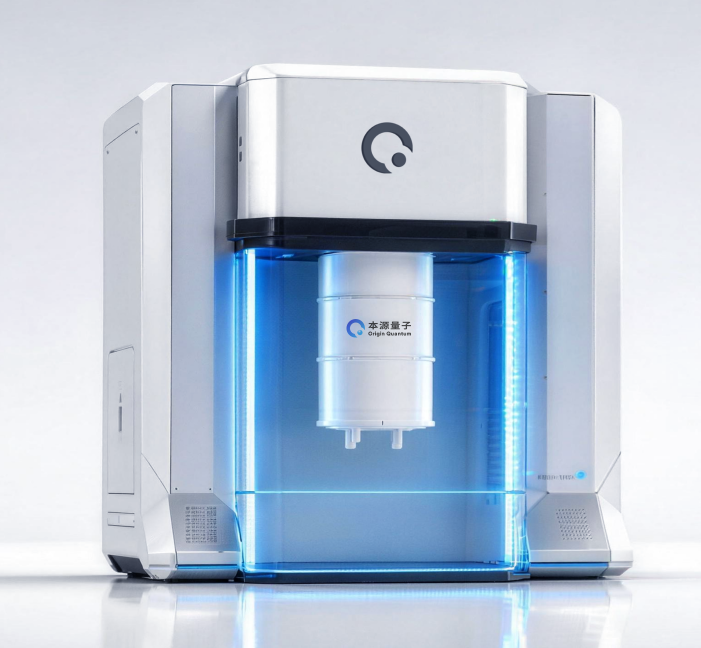
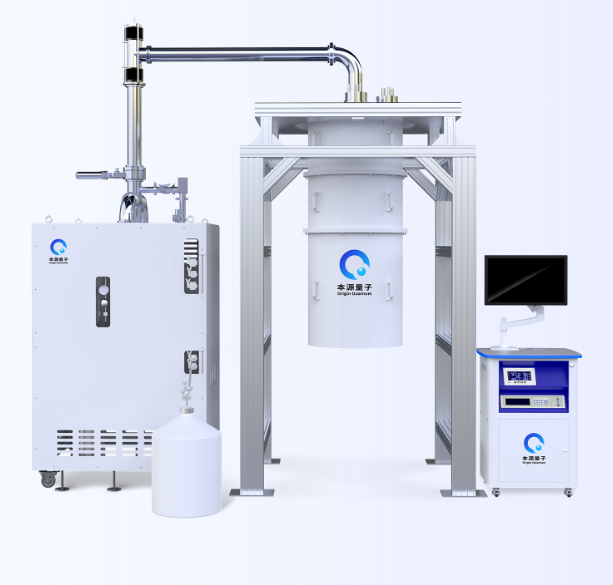
Quantum computers are incredibly fragile. They need to be kept at temperatures colder than outer space (near absolute zero) and isolated from any vibration or electromagnetic interference. Building one is not something your average startup—or even most Fortune 500 companies—can do.
That is where quantum cloud services come in. They democratize access to quantum power, letting researchers, developers, and businesses experiment with quantum algorithms without the astronomical costs.
How Does a Quantum Cloud Service Work?
Let us dive a bit deeper into the mechanics. While the concept sounds simple, the underlying technology is anything but. Here is a step-by-step breakdown of what happens when you use a quantum cloud service:
Step 1: Write Your Quantum Program
Unlike classical computers that use bits (0s and 1s), quantum computers use qubits. Qubits can exist in multiple states at once thanks to a property called superposition. They can also be entangled, meaning the state of one qubit instantly influences another, no matter the distance.
To harness this power, you write programs using specialized software development kits (SDKs) like:
- Qiskit (IBM)
- Cirq (Google)
- Q# (Microsoft)
- QPanda(Origin Quantum)
These tools let you design quantum circuits—sequences of quantum gates that manipulate qubits to perform calculations.
Step 2: Submit to the Cloud Platform
Once your circuit is ready, you submit it via an API or a web interface to your chosen quantum cloud provider.
Step 3: Job Queuing and Calibration
Here is where things get interesting. Quantum computers are not always ready to go. They require constant calibration because qubits are so sensitive to environmental noise.
When you submit a job:
- The system checks the current status of available quantum processors.
- Your job enters a queue.
- Before execution, the system may recalibrate the hardware to ensure accuracy.
Step 4: Execution on Real Hardware (or Simulator)
Your quantum circuit runs on a real quantum processor or a high-fidelity simulator. The machine performs the calculation using quantum mechanics principles.
Step 5: Results Returned
After execution (which can take seconds to hours depending on queue length), the results are sent back to you.
Quantum vs. Classical Cloud: Key Differences
It is important to clarify: quantum cloud services are not replacements for classical cloud services like AWS EC2 or Google Compute Engine. They are complementary tools for specific problems.
| Feature | Classical Cloud Service | Quantum Cloud Service |
|---|---|---|
| Processing Unit | CPU/GPU (bits: 0 or 1) | QPU (qubits: 0, 1, or both) |
| Best For | Web hosting, databases, general computing | Optimization, simulation, cryptography |
| Speed | Fast for sequential tasks | Potentially exponential speedup for specific algorithms |
| Error Rate | Very low (< 1 error per billion ops) | High (noise-sensitive, requires error mitigation) |
| Cost Model | Pay-per-hour or per-request | Often free tier + paid priority access |
| Accessibility | Widely available | Limited to select providers, queued access |
| Programming Model | Python, Java, C++, etc. | Qiskit, Cirq, QPanda, Braket SDK |
A decade ago, accessing a supercomputer required government clearance or a university affiliation. Today, you can tap into the power of quantum mechanics from your bedroom using nothing but a browser.
Quantum cloud services are breaking down barriers, turning theoretical physics into practical tools for innovation. Whether you are optimizing a supply chain, designing a new material, or just satisfying your curiosity, the quantum cloud is open for business.
Contact Us
 (+86) 177 3001 9472
 market@originqc.com