Quantum Simulator vs Quantum Computer: Key Differences Explained
Quantum computing doesn't work the way most people think. You can't just buy a quantum computer and start running algorithms. Most researchers start somewhere else entirely—with a quantum simulator running on ordinary hardware. That gap between simulation and real quantum hardware is where the confusion starts.
What Is a Quantum Simulator?
Think of a quantum simulator as a translator. It takes quantum circuits and runs them on your laptop or workstation using classical math—matrix operations, state vectors, the whole linear algebra toolkit. No actual quantum physics involved. Just really good at pretending.
Here's the catch: for full statevector simulation, simulating quantum states eats memory like nothing else. Every additional qubit doubles the classical resources you need. By the time you hit around 40-50 qubits, you're pushing into supercomputer territory. That's why most quantum simulator implementations cap out well below that threshold. (Though other methods, like tensor networks, can push these limits for specific circuit types.)
But within those limits, a quantum simulator is incredibly useful.
- Runs on standard CPUs and GPUs—no exotic hardware required
- Replicates quantum behavior through classical computation
- Can output exact mathematical states (statevectors) or simulate probabilistic measurements
- Lets you prototype and test without booking time on actual quantum hardware
- Works well for full-state circuits up to roughly 20-50 qubits, depending on your resources
What Is a Quantum Computer?
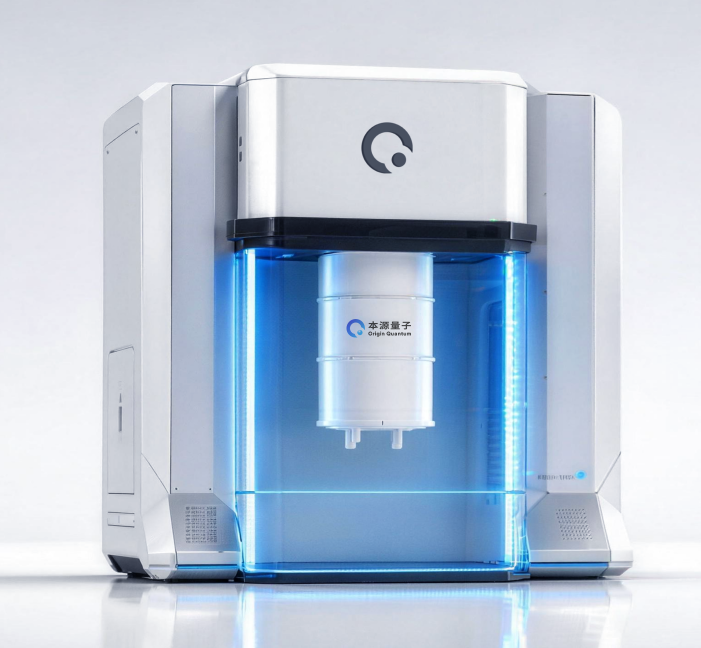
A quantum computer is the real thing. Actual qubits. Actual superposition. Actual entanglement. Instead of simulating quantum mechanics on classical bits, it uses quantum mechanical systems directly to process information.
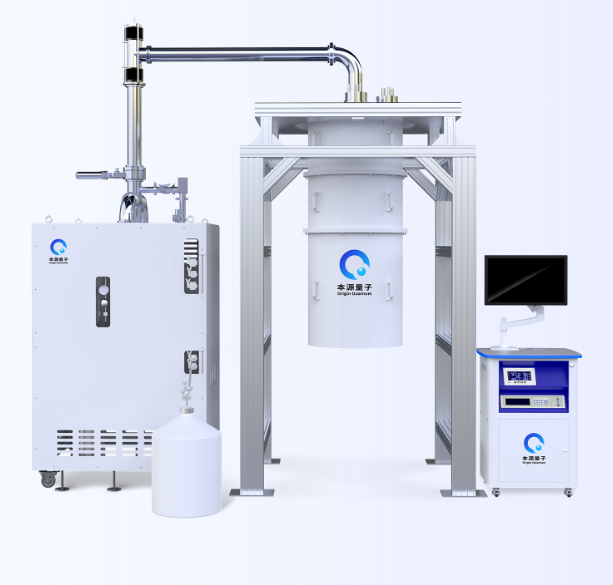
Building one is hard. Really hard. Current quantum computer implementations utilize various physical approaches including superconducting circuits, trapped ions, topological qubits, and photonic systems. Superconducting qubits need cryogenic temperatures. Trapped ions struggle with scaling. Photonics face detection efficiency challenges.
The output is different too. While a quantum simulator lets you peek directly at the exact mathematical state, a quantum computer only gives you probabilities through physical measurement. Run the same circuit multiple times, and you'll see a distribution of results. That's not a bug—it's how quantum measurement works. You're not getting one answer. You're sampling from the quantum state itself.
- Exploits genuine quantum mechanical effects—superposition, entanglement, interference
- Uses physical qubits: superconducting circuits, trapped ions, photonics, or other modalities
- Strictly returns probabilistic outcomes that require multiple shots to build statistics
- Can tackle certain problem classes no classical system can handle efficiently
- Needs specialized infrastructure—extreme cooling, vibration isolation, electromagnetic shielding
Quantum Simulator vs Quantum Computer: Core Differences
The choice between a quantum simulator and a quantum computer comes down to what you're trying to accomplish. It's not about which is better. It's about which is right for your specific situation.
| Aspect | Quantum Simulator | Quantum Computer |
|---|---|---|
| Underlying Technology | Classical hardware running simulation software | Physical quantum hardware exploiting genuine quantum effects |
| Qubit Capacity | Roughly 20-50 simulated qubits (memory-limited for full states) | Tens to hundreds of physical qubits and growing |
| Result Type | Exact statevectors or simulated probability distributions | Strictly probabilistic—requires statistical analysis across multiple runs (shots) |
| Accessibility | Run it on your own machine or any cloud instance | Access through specialized cloud platforms or research facilities |
| Cost | Minimal—uses existing computing infrastructure | Substantial—specialized hardware and facility requirements |
| Noise and Errors | Ideal by default, but allows injection of custom noise models | Subject to real, unmodeled physical noise, decoherence, and crosstalk |
| Scalability | Exponentially constrained by classical memory limits | Theoretically scalable, engineering-limited in practice |
| Development Stage | Mature—standard tool in research and education | Emerging—rapidly advancing but still maturing |
When to Use a Quantum Simulator
Start with a quantum simulator. Almost always. Especially if you're new to quantum computing or prototyping a new algorithm.
Universities teach quantum computing with simulators for exactly this reason. Students can experiment freely, see immediate results, and build intuition without needing access to million-dollar quantum hardware.
Even experienced teams use a quantum simulator as their first stop. Before you submit a job to a real quantum computer, you want to know your circuit actually does what you think it does. A quantum simulator catches the obvious bugs—the gate applied to the wrong qubit, the measurement in the wrong basis, the circuit that doesn't even compile. Save yourself the queue time and debug locally first.
- Learning quantum computing: A quantum simulator lets students and developers experiment immediately—no approvals, no queue times, no cloud costs
- Algorithm prototyping: Build and test logic on a quantum simulator before moving to physical quantum computer hardware
- Debugging circuits: The ability to inspect the exact statevector makes it straightforward to isolate what went wrong
- Benchmarking: Use a quantum simulator to generate reference results you can compare against quantum computer outputs
- Small-scale problems: If your algorithm fits within classical simulation limits, a quantum simulator gives you clean, fast results
When to Use a Quantum Computer
There comes a point where simulation stops working. Push past 50 qubits and even the best classical supercomputers start sweating. That's when you need a real quantum computer.
But it's not just about scale. Sometimes you need to study the hardware itself. How does decoherence affect your specific circuit? What do error rates look like under actual operating conditions? While you can inject mathematical noise models into a quantum simulator, a quantum computer shows you what actually happens in the physical world—complex, unmodeled physical noise, crosstalk, gate infidelity, measurement errors and all.
Companies exploring quantum advantage for optimization, drug discovery, or financial modeling are already accessing quantum computers through Origin Quantum Cloud, and others.
- Beyond classical limits: When your circuit exceeds what a quantum simulator can handle—too many qubits, too much depth—you need a quantum computer
- Exploring quantum advantage: Testing whether your specific problem class benefits from actual quantum computation
- Hardware characterization: Studying real decoherence patterns, error rates, and system behavior requires a physical quantum computer
- Production deployment: Real-world quantum applications ultimately run on quantum computer infrastructure, not simulators
- Error correction validation: While QEC schemes are developed on simulators, validating them against real-world noise demands genuine quantum hardware
Best Practices for Working with Quantum Simulator and Quantum Computer Technologies
The teams that move fastest in quantum computing don't pick one approach. They use both—a quantum simulator for development, a quantum computer for validation and scaling. Here's what works in practice:
- Develop on a quantum simulator first: Build your algorithm, test your logic, and establish your baseline on a quantum simulator. It's faster, cheaper, and gives you exact results to work from
- Keep your code hardware-agnostic: Write circuits that run on both a quantum simulator and quantum computer. Frameworks like Qiskit and QPanda make this straightforward
- Compare outputs: Run the same circuit on a quantum simulator and quantum computer. The differences tell you exactly where hardware noise is impacting your results
- Use cloud quantum computer access: IBM Quantum, Origin Quantum—these platforms let you run on real quantum computer hardware without building a cryogenic lab
- Version control everything: Track your circuit designs, simulator runs, and quantum computer results. You'll want that history when debugging or reproducing results
The quantum simulator is your development environment—accessible, deterministic, perfect for learning and prototyping. The quantum computer is your production system—scaling beyond classical limits, delivering actual quantum computation for problems that matter. Use a quantum simulator to build and test. Use a quantum computer when you're ready to scale. Both have their place, and understanding when to use each one is what separates effective quantum projects from frustrated ones.
Contact Us
 (+86) 177 3001 9472
 market@originqc.com